

Best Activities and How to Play with a Baby and Toddler Based on the Multiple Intelligences and Their Learning Styles!
Every kid is unique and may have preferences for certain activities. Here is a list of activities to do with a baby or toddler sorted into their Multiple Intelligences and learning styles:
Logical:
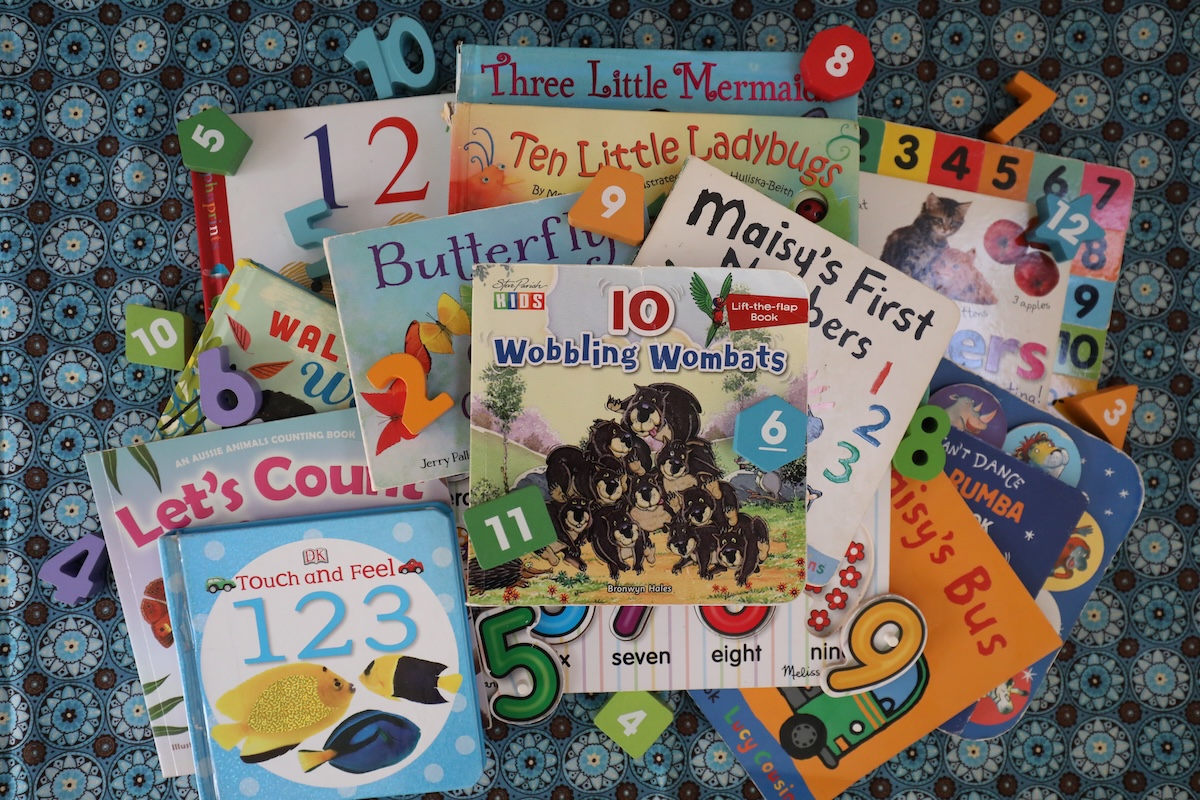
- Engage children in object counting exercises, whether it’s counting objects in books or in their play area like blocks and toys.
- Encourage comparisons between toys, such as identifying larger balls or piles with more objects, and recognizing shapes like circles.
- Introduce puzzles progressively, starting with puzzles featuring big chunky knobs (like Melissa & Doug), then advancing to big chunky puzzles with a few pieces depicting animals.
- They also enjoy the shape puzzles where you have to fit the 3-D shape in the correct shape to put inside a box. They also like the donut circles where you have to put them back on the stick from largest to smallest.
- There are number puzzles where they stack numbers in the correct order. My favorite one is Melissa & Doug where they have the number of objects under the chunky puzzle piece so they can count the objects before putting the piece back on.
Linguistic:
- Books, Books, Books. In their early years, babies favor black and white illustrations, interactive sounds, lift-the-flap books, tactile elements like rough and soft textures, simple stories, animal themes, ABCs, 123s, musical books, nursery rhymes, rhyming books, board books, Dr. Seuss, Pip and Posy, Hairy Maclary, Maisy, Clifford, and more.
- Engage with your little one by reading books, reciting nursery rhymes, singing songs, and discussing the world around you.
- From 0-6 months, babies enjoy high-contrast (even color) black and white books. Also, they love books about animals and making animal sounds or singing songs while reading – “Old MacDonald Had a Farm…” or “Twinkle Twinkle Little Star.” Encourage learning by pointing out different colors, shapes, count all the stars, count all the bears/hearts, etc. Point out the biggest/smallest object on the page.
- During walks, describe the birds, wind, trees, and surroundings to them. Highlight various objects and engage them in the environment around them. Point out objects and say everything that is happening.
- Check out the blog post on books here.
Visual:
- Match their toys to the pictures in the books. Or while reading about something, find the object around the room. Animal figurines can be excellent for this purpose. For example, when reading about a giraffe, my daughter picked up her giraffe toy and pointed to the book. Name the object, make its sound, and locate matching toys in the room while reading.
- You can also search online for pictures/videos to visually enhance the learning experience.
Bodily–Kinesthetic:
- Start by engaging in tummy time anywhere you find convenient. We were gifted a blanket that had black and white on one side for those HIGH-CONTRAST colors, then it flipped to the other side to have fun colors. They loved their tummy time blankets. We would put up books to look at (black and white animal books – or any book basically), mirrors so they could look at themselves, and have toys to play with (rings, those soft squishy rattles, teething toys, blocks, etc.). Transition from tummy time to laying on their back, looking up at toys on a baby gym, including mirrors and hanging rings for them to try to grasp, and soft teething rattles. Then when they got tired of that, flip them and go back on tummy time and back and forth until they were ready for their nap.
- Build towers with blocks, then they would try to crawl through and knock it down. Playing with balls (sensory balls) and rolling them around.
- Let them crawl through long tubes (like at gymnastics) and use walkers for support while walking
- For older children, consider activities like popping bubbles from a bubble machine. Shooting basketballs in little toddler hoops. Putting a pickleball on a string and hanging it from the basketball hoop and having them hit the pickleball with a paddle. Or hitting a balloon with a paddle.
- Playing with play-doh and painting eventually.
- Engage in water play in a pool as simple as just sitting on your lap in a pool and kicking around. Or having water play in a bucket of water with measuring cups. Play in the sand at the park/lake/beach, and dance for fun.
Interpersonal (people):
- Spending quality time with loved ones, attending baby classes like swimming, and visiting the library for story time. Dance party together. Blow bubbles and pop them. Petting a friendly dog. Enjoying outings to places like amusement parks for interactions, rides, and shows.
- Engaging in activities like playing “patty-cake, patty-cake, baker’s man, bake me a cake as fast as you can, roll it, pat it, mark it with a B and put it in the oven for BABY and me (change B and baby to your baby’s name). Do the hand motions while singing the song.
Music:
- Listening to music, singing, and dancing are favorite activities. We enjoy reading nursery rhyme books, singing the rhymes, and playing games like “This little piggy…” where we touch their toes while singing. We modified the lyrics to count up to five little piggies for added fun and learning. They love songs, communicating, and playing. We changed the lyrics to “one little piggy, two little piggies, three little piggies, four little piggies, and FIVE little piggies… WEEEE!!!” Meanwhile, we would touch a different toe while saying a new number, then when all done, we would throw our hands in the air saying weee and celebrating that we counted to five!!! After playing this game while singing, they were able to count to 5 and making it easier to move on to learn to count to 10. Breaking the counting into smaller parts helped them grasp the concept quicker.
- During car rides, we would listen to educational videos on YouTube, such as nursery rhymes, ABC songs, counting to 100, and music in different languages. As they grow older, we introduce multiplication songs and skip counting videos. Some favorites were nursery rhymes, singing the ABCs, counting to 100 (Jack Hartman), music in a second language (A Little Mandarin, BabyBus, Kim Hsieh, Little Fox Chinese, Little Dragon Tales, Disney Music in Chinese on YouTube). When they are older, it progresses to Mr. DeMaio Multiplication Songs, Numberock Multiplication – skip counting, etc. We would do this not just on car rides but while playing.
- Playing instruments is fun like xylophones, pianos, train whistles, and shakers is always enjoyable. Children can create their own music, sing along, or play instruments to the music.
Nature:
- As easy as peering out the window or stepping into the backyard. If you have a stroller, take leisurely walks and discuss everything you see. Playing at the park, whether it’s in the sand, on the slides, swings, or simply crawling around, can be enjoyable.
- They might love visiting the pool, where they can blow bubbles, splash around, and kick their legs while singing songs.
- Exploring the farm, zoo, or aquarium to see the animals from their books can be fascinating. A petting zoo is another favorite, but remember to wash hands after touching the animals.
- Strawberry farms, pumpkin patches, sunflower fields, and other flower fields can be both fun and educational. Pony rides are a delight as they grow older.
- Trips to the beach introduce them to the sensory experience of sand.
- A visit to Disneyland after their first birthday can provide them with varied experiences and social interactions. They had music and tried new rides, and overall, it helped them with things outside of Disneyland. The first year they enjoyed: the Tiki Room, Toddler Dance Party, Carousel, Dumbo, Small World, Ariel, Teacups, Boats, Casey Jr. train (might be a little scary, especially if sitting in the cage), Big Steam Boat, Jungle Cruise, Submarine, Mickey and Minnie house for a memorable time.
Intrapersonal (Individual):
- They enjoy playing with a variety of toys, such as blocks, balls, teething toys, sensory toys, squishy rattles like a Lamaze cube, squishy books with ribbons, play phones, stacking cups, animal barn sets, dolls, toy cars, play kitchens, Magna-Tiles, and Duplo. Additionally, they might have a cherished stuffed animal, such as a bear.