


Multiplication is more than just memorizing tables—it’s about discovering patterns, exploring relationships, and engaging with math in dynamic, meaningful ways. By tapping into Howard Gardner’s theory of Multiple Intelligences, educators can create enriching learning environments that cater to every student’s unique strengths. Whether it’s through storytelling, hands-on activities, visual representations, or musical rhythms, multiplication can be transformed from a dull exercise into an exciting adventure. This guide is packed with creative games, activities, and investigations designed to make multiplication both fun and effective for learners of all styles.
Linguistic
- Story Problems with Role Play: Have students create their own story problems involving multiplication and then act them out.
- Storybook Problems: Read a story (e.g., animals in groups). Identify parts that involve grouping. Create and solve multiplication problems from the story.
Books:
- Breakfast at Danny’s Diner – Judith Stamper
- Spunky Monkeys on Parade – Stuart J Murphy
- Count on Pablo – Barbara deRubertis
- Sea Squares – Joy Hulme
- Stacks of Trouble – Martha F. Brenner
- 2×2=Boo! – Loreen Leedy
- Multiplying Menace
- One hundred Hungry Ants – Elinor J Pinczes
- How do you Count a Dozen Ducklings – Seon Chai
- The Best of Times – Greg Tang
- The Grapes of Math – Greg Tang
- Amanda Bean’s Amazing Dream: A Mathematical Journey – Cindy Neuschwander
- Sea Squares – Joy N Hulme
- Each Orange Had 8 Slices – Paul Giganti Jr.
- Emma’s Grouping – JL Cornish
- Math Potatoes – Tang
- Too Many Kangarroo THings toDo – Stuart Murphy
Logical-Mathematical
- Begin with the math facts of 0, 1, and 10, followed by 2 and 5, before progressing to the others: 3, 4, 6, 7, 8, and 9.
- Start with skip counting and skip counting songs as well as skip counting puzzles
- Multiplication Mystery Puzzles: Provide a card, e.g., “_ × 4 = 20.” Guess and check numbers that fit. Confirm with repeated addition if needed.
- Factor Pair Investigation: Choose a product, like 24. Find different ways to arrange counters (e.g., 3 × 8, 4 × 6). Record all factor pairs.
- Number Bonds. Fact families.
- Fill a jar with a specific amount of beans, balls, Cheerios, etc. Ask participants to estimate how many scoops it took to fill the jar. After guessing, reveal the actual number of beans inside and challenge them to calculate how many scoops were used. Test their answer and discuss how many beans are in each scoop.
- Multiplication Mazes: Solve mazes where the correct path depends on answering multiplication problems correctly.
Visual-Spatial
- Array Building: Provide students with manipulatives such as blocks, counters, or. magnates. Ask them to create arrays to represent different multiplication problems (e.g., 3 x 4 can be represented with 3 rows of 4 blocks). Have them explain how the array shows the multiplication concept. Or give students the multiplication problems. Or provide students with 20 counters. Instruct them to create an array, like 3 rows of 4 counters. Count how many in each row and how many rows. Write the multiplication sentence (3 × 4 = 12). Explore different arrays with the same total.
- Group Arrays with Art Supplies: Give students art supplies like stickers or colored paper. Have them create visual representations of multiplication problems by arranging the supplies into arrays or groups. They can then present their work to the class.
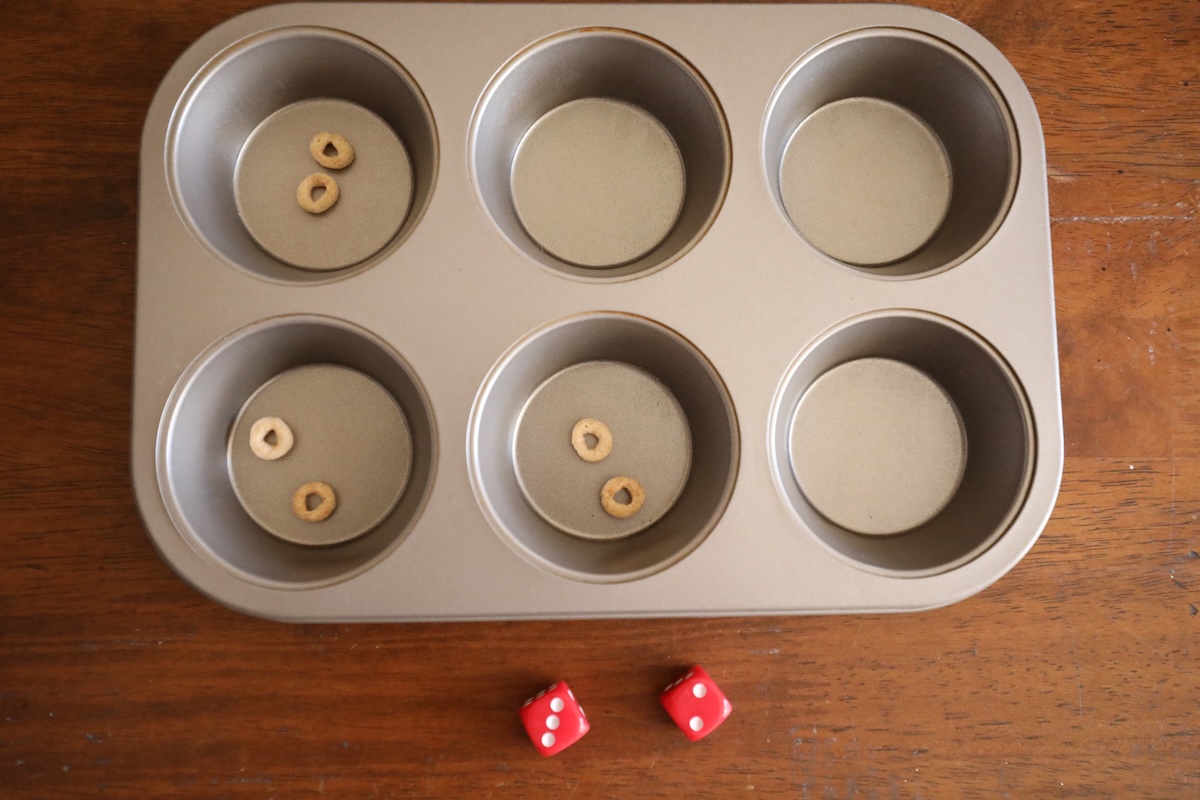
- Egg Carton Multiplication: Fill rows with objects, e.g., 2 rows of 6. Count items in total. Write the multiplication sentence: 2 × 6 = 12. Alternatively, use bowls or muffin tins as well with objects such as beans or beads.
- Skip Counting Patterns: Give each student a hundreds chart. Choose a number to skip count, like 5. Highlight multiples of 5 (5, 10, 15…). Observe the pattern formed. Discuss how it connects to multiplication. Or do this on MathPlayground.
- Each child selects their own multiplication problem. Create “cookie” shapes out of construction paper; one number represents the quantity of cookies, while the other number indicates the amount of chocolate chips on each cookie.
- Use Legos/ Duplo/ Magnatiles to make arrays or groups for problems. Find array’s or groups of rhinngs in real life to solve. For example, eggs in an egg carton, cookies, chocolate bars, etc.
Manipulatives:
- Duplo/ Lego/ Base ten blocks (tangible, picture, or draw square, line, dots…)
- 100, 10’s, 1’s coins
- Number Line
- Monopoly money/Fake Money / Coins
- Cards – playing cards, Uno, or Skipbo
- Dominoes
- Number tiles (like Scrabble tiles)
- Beads (like Montessori but make your own)
- Tens Frame
- Number Bond
- Part-Part-Whole
- Hundreds Chart
- Beads, Beans, play-doh, etc.
- Magna-Tiles
- Ruler/ Measuring Tape
Bodily-Kinesthetic
- Skip Counting Hopscotch: (Chalk for outdoor play or tape for indoor variation.) Draw a hopscotch board with numbers representing skip-counting sequences (e.g., multiples of 3: 3, 6, 9, 12…). As students hop on each number, they say it aloud, reinforcing multiplication sequences.
- Interactive Number Line: Use a large number line on the floor and have students hop to the correct product by jumping in increments that represent one of the factors. For example, to solve 4 x 3, they can start at zero and jump in groups of four three times.
- Multiplication Scavenger Hunt: (Pre-made cards with multiplication problems and answers hidden around the room.) Hide cards with multiplication problems and separate cards with answers. Students must find a problem and then search for its corresponding answer. The goal is to collect as many correct pairs as possible.
- Building Block Towers: Build towers, e.g., 4 towers with 3 blocks each. Count blocks in each tower. Write the multiplication sentence: 4 × 3 = 12.
- Use hula hoops or string to create groups, then employ balls or other materials as objects within those groups to solve multiplication problems.
- Play basketball (or their preferred sport), and every time they solve a problem correctly, take a shot to score a point.
- Write the answers in chalk on the ground, then state a problem and have them race to the correct answer. Alternatively, you can place the answers on sheets of paper scattered throughout the room.
- Play twister by assigning math problems to each color. Spin the wheel to land on a circle with a problem, and then solve it. Alternatively, you can create your own problems; once a player answers correctly, it’s their turn to spin!
- Multiplication Relay Race: (Flashcards, relay baton (optional).) Teams race to solve flashcards. Correct answers allow the next teammate to go.
- Ball Toss Multiplication: Toss the ball to a student while saying a number. The catcher multiplies it by a given factor.
- Sticky Note Match-Up: (Sticky notes with problems and answers.) Place notes around the room. Students find and match pairs.
- Multiplication Jenga: Write problems on blocks. Players solve before removing the block.
- Number Line Races: Solve multiplication problems to advance along the number line. First to finish wins.
- Multiplication Relay Races: Teams of students solve flashcard problems in a relay format to combine movement with math practice.
Musical
- Multiplication Songs: Create jingles or raps that help memorize times tables. Students can perform their songs in groups.
- Musical Multiplication Chairs (Chairs, music, flashcards.) Like musical chairs, but players answer a multiplication problem when the music stops.
- YouTube: Numberock -Equal Groups Multiplication, Jack Hartmann – Multiply by __ Learn Multiplication, Mr Demaio – Multiplication Songs, Numberock – 2-10 Multiplication Videos, Jack Hartmann – Skip Counting 2,3,5,10, Have Fun Teaching – Skip counting 2-10, Kevin Bullock – Schoolhouse Rock Multiplication Rock!!!
Interpersonal
- Flash Card Face-Off: (Multiplication flashcards.) Two players sit facing each other. A flashcard is shown, and the first to shout the correct answer wins the card. The player with the most cards at the end wins.
- Multiplication Bingo: Create bingo cards with products in the squares. Call out multiplication problems, and students must find the correct product on their cards.
- Multiplication Bingo: Bingo cards with multiplication problems, markers or chips. Create bingo cards filled with multiplication problems (e.g., 6×7, 8×5). Call out the answers randomly (e.g., “42”). Players cover the problem that matches the answer. The first to get five in a row wins. Or they must pick a square and solve the equation correctly before placing their marker on it.
- Multiplication War (Card Game): (A deck of playing cards (use numbers 1–10).) Each player flips two cards and multiplies them. The player with the higher product wins both sets of cards. Continue until the deck is gone. The player with the most cards wins.
- Roll and Multiply: (Two dice, paper, and pencils.) Players take turns rolling both dice, then multiplying the numbers together. For an added challenge, use 10-sided dice. Players can keep score to encourage competitiveness.
- Select a skip counting sequence, such as counting by 2s. Designate a target number that will be called out as “BEEP,” for instance, 20. One player begins counting and can start from any number they choose. Continue around the circle, counting forward. When the target number is reached, that player will say “BEEP” and is eliminated from the game. The next player will then choose a new starting number and keep the game going until only one person remains, who will be declared the winner.
- Gather three bowls. Conceal one object under one of the bowls, or place a different object under each bowl. Place an equation on top of each bowl. Have the child solve the equation to determine if they have discovered the object they were searching for.
- Create a play store where children can purchase figurines or toys for $5 (or based on the table you’re using) using their play money or imaginary currency.
- Hide the problem in a location. Encourage the child to search for it, and once they discover it, say the answer.
- Multiplication Board Game: (Game board, dice, and question cards.) Move pieces based on dice rolls and answer questions to progress.
- Engage in a fun game with a partner. One individual begins by rolling the dice while the other starts writing down numbers by skip counting—choose a number to skip count by and continue until you reach the nearest number to 100. When a player rolls a double (for example, 6 and 6), it’s time to switch roles. Now, the second player rolls two dice while the first player resumes skip counting from 0 to 100. The first person to reach 100 is the winner. When they switch places, they carry on writing numbers from where they left off.
- Use Number Tiles by writing +, -, x, /, and = on the reverse side. Select seven tiles to create number sentences. (Use the signs from the other tiles that are not being used.) Take turns with a partner, linking your equations together like you would connect words in Scrabble.
- Tic-Tac-Toe: Set up your own board with answers to flashcards on the board. Alternatively, put multiplication problems on the board and have to answer correctly before playing.
- Pyramid of cards: Set up a pyramid of cards. Must multiply two cards next to each other correctly before taking them off the pyramid. Work your way to the top.
- BUMP: Set up multiplication problems on the board. Or write in different numbers on the board and must multiply that number to the number rolled on a die or flipped on a card correctly before putting your piece there.
- HEAD CARDS: Two people put cards on their head. Third player says the product of their cards. They can look at the their opponents card and use the product and their number to say what the number is on their head.
- Dominoes: Can multiply the numbers on the domino.
- Snakes & Ladders, Around & Around, Clear the Board, Battleship, Mathopoly
- Use cards or dice. Add, Subtract, Multiply, and Divide as fast as you can.
- Board Games: Prime Club, Shut the Box
Intrapersonal
- Beat the Clock: (Timer, paper, and pencil.) Give students a sheet of multiplication problems. Set a timer for one minute. The goal is to solve as many problems correctly before time runs out. Repeat to try to beat their personal best.
- Multiplication Puzzles: (Puzzle cards with multiplication problems split into parts.) Create cards where one side has a multiplication problem and the other side has the answer. Cut them into puzzle pieces. Students must match the problems to the correct answers to complete the puzzle.
- Multiplication Memory Match: Lay cards face down. Students flip two at a time, trying to find matching problem-answer pairs.
- Color by Product: (Coloring sheets with multiplication problems.) Students solve problems to find the correct color code and complete the image.
- Egg Carton Multiplication: (Egg cartons, small balls, markers.) Label compartments with numbers. Shake balls inside, then multiply the numbers where they land.
- Online: Funbrain – Math Baseball, Arcademics – Grand Prix Multiplication, Arcademics – Meteor Multiplication, Arcademics – Penguin Jump, Arcademics – Space Race, Arcademics – Tractor Multiplication, ToyTheater – Racing, Arcademics – Space Race, Arcademics – Tractor Multiplication, Math Playground Math Monster Multiplication, Arcademics – Grand Prix Multiplication, Arcademics – Penguin Jump, Math Playground Music Shop Multiplication, ToyTheater – Math Bingo Game
- OSMO: Fish (number tiles), Math Wizard Series – Enchanted World Games, Amazing Airships
- NCTM APPS: Partial Product Finder, Number Rack, Number Pieces, Number Line,
- APPS: Duck Duck Moose – Math Bingo, IXL, Khan Academy Kids, Khan Academy,
- Websites:MathPlayground, Arcademics, FunBrain, 99 Math
Naturalistic
- Cooking Measurements: In a cooking activity, have students double or triple a recipe. They can measure out ingredients to see real-world applications of multiplication. For example, if a recipe calls for 2 cups of flour and they double it, they will need 4 cups.
- Nature Multiplication Hunt: Go outside and have students collect natural items (like leaves or stones) in groups. They can create multiplication problems based on the number of items they collect, such as if they find 5 groups of 3 leaves.
- Clothing Combinations: Draw 3 shirts and 4 pairs of pants. Match each shirt with each pair of pants. Count combinations: 3 × 4 = 12.
- Tiling the Garden (Area Model): Draw a rectangle, e.g., 5 squares long by 3 squares wide. Count squares inside (5 × 3 = 15). Color different rectangles with the same area.
- Real-Life Multiplication Scenarios: Present a scenario (e.g., “4 baskets with 6 apples each”). Draw a picture of baskets and apples. Write a multiplication sentence: 4 × 6 = 24. Solve and explain reasoning.
- How many floor tiles in a room? Use multiplication to find how many.
- Incorporate real-life examples of arrays displayed around the room, prompting students to write the corresponding equations and count the items. Some examples include: Water bottles, A baker’s dozen, Candy bars, Egg cartons, Packs of water bottles, Donuts in a box, Twister mats, Soda cartons, Ferrero Rocher, Boxes of crayons, Tiles on the floor, Checkerboards, Watercolor paint palettes, And more.
- Animal Grouping Investigations: Pose problems such as, “If there are 5 bird nests with 4 eggs each, how many eggs are there in total?”
When multiplication is taught through diverse, interactive approaches that align with students’ natural learning preferences, it becomes an engaging and accessible journey. From acting out story problems to creating colorful arrays, solving logic puzzles, participating in relay races, and even exploring nature, the possibilities are endless. By incorporating these strategies into your classroom or home learning environment, you’ll foster not only mathematical proficiency but also a lifelong love for learning. Dive in, explore, and watch your students multiply their understanding with confidence and enthusiasm!
Your Multiplication Concepts Packet:
Multiplication Investigations
Over 100 Pages of Concepts Already Made Up

@engagethestages
Get Your Multiplication Games Packet:
Multiplication Games
Over 50 Pages of Games Already Made Up

@engagethestages