

I’ve created decodable books with pre-made activities for children. Additionally, kids can complement these with BOB books for further reading. To enhance the reading experience in a unique way, here are some engaging activities and games that offer a different approach to reading.
Here are some reading and word games based off the multiple intelligences that can be fun and educational for children and adults alike.
Reading based on Multiple Intelligences:
Bodily-Kinesthetic:
- First, consider setting up a “Reading Scavenger Hunt.” Hide clues around the house or classroom that guide the children through a story. Each clue can be a small excerpt from a book or a question about the story they need to answer to find the next clue. This activity encourages attention to detail and comprehension.
- Another fun idea is “Character Role-Playing.” Have the children choose their favorite characters from the books they’re reading and act out scenes. You can provide simple costumes or props to make it even more engaging. This helps them understand character motivations and improves expressive reading skills.
- Charades: Act out words or phrases without speaking, encouraging physical expression and quick thinking.
- Twister Word Game: Combine the classic game of Twister with spelling challenges, requiring players to spell out words as they contort their bodies.
- Whichever book number you’re on, call out a word from the word family from it. Child JUMPS says the word, then JUMPS to their side and says a rhyming word. For instance, for the “AT” word family, they could say “MAT” and then “RAT” while jumping back and forth.
- Write with chalk on the ground (or print out the words) and say the word and have them run to it. For example: “mat,” “cat,” “sat,” and “rat” on the floor and say “RAT” and they run to that word. OR scatter printed out words around the table, have the child slap the corresponding word after you say it.
- Grab 7 letters or bananagrams letters and try to make as many words as you can in under a minute. Write to the side on a whiteboard or paper to record.
- Get some sand or play dough. Make the words with play-dough or trace with your finger or a stick in the sand/dirt.
- Hide words around the room. Have the child look for the words and when they find it say the name of the word. If they can, find the tangible object. Variation 1: Scatter words around the room. When you say a word, they have to run to it. Variation 2: Say word with that sound and they have to run to that sound or word that is taped on the wall or floor. Variation 3: When they find a word – say it, write it, and draw a picture of it.
- Play Twister. Put words on all of the colors. Call out a random color and have them pick a spot they haven’t done and say the word. If correct, then they can put their hand or foot down on that color. Or have a bowl of words and they can’t move until they say the word.
- Play a musical chairs variation by placing words on the chairs, prompting children to say the word correctly when the music stops and repeat. If correct, take the word away. If wrong, keep the word in the circle.
- Create phrases with words appropriate for their level and act them out or play Pictionary.
- Slap letters as sounding out a word. Or put out all sound cards and have to slap the doubles (find matching cards with the same sound) and say the sound correctly.
- Read a short phrase and act out.
- Have bags/bowls with sound focus on the front. Toss a ball/chip into a bag. Take out a word and read it. Or match pictures to the sounds and put them in the bags/bowls.
- Place words around the room. Find words taped on walls around house or classroom. Say the word then write it next to the picture on your page or match to a tangible object around room or to picture. Variation: Paste pictures on the wall and when they see a picture they have to write it out next to the number that is associated with the picture.
Naturalistic:
- Get some sand or play dough. Make the words with play-dough or trace with your finger or a stick in the sand/dirt.
- Nature Scavenger Hunt: Create a list of natural items to find during a walk or hike, encouraging observation and appreciation of the environment.
Interpersonal:
- “Book Swap Parties” can be both social and enriching. Organize a small gathering where children can exchange books they’ve finished reading. This not only introduces them to new stories and genres but also fosters a sense of community and sharing among young readers.
- Grab 7 letters or bananagrams letters and try to make as many words as you can in under a minute. Write to the side on a whiteboard or paper to record.
- Get 3 bowls. Hide one object under one of the bowls or 3 different objects under each bowl. Put each new word on top of a bowl. Have the child say the word to see if they found the object they were looking for. Alternatively, hide the picture of the word under the bowl so they can check to see if they are correct.
- Play Twister. Put words on all of the colors. Call out a random color and have them pick a spot they haven’t done and say the word. If correct, then they can put their hand or foot down on that color. Or have a bowl of words and they can’t move until they say the word.
- Place words cut out on paper in a bowl or write them on popsicle sticks, then mix them up. Draw a word from the bowl: if you read it correctly, you get to keep it; if not, return it. Introduce “Oh Snap” cards/sticks: drawing one means putting back all correctly guessed words and keeping the “Oh Snap” card.
- Slap letters as sounding out a word. Or put out all sound cards and have to slap the doubles (find matching cards with the same sound) and say the sound correctly.
- Utilize words for a GUESS WHO game.
- Create your own board game (on a whiteboard or with self-made word cards) resembling Candy Land, a spiral movement, or a big circle. Roll a dice or flip a playing card and go that many spaces and put your marker on it (or take away the past pictures/words/cards you’ve landed on). Players advance by rolling dice or playing cards, reading and pronouncing words correctly to progress. Incorrect answers lead to moving back to the previous spot.
- Design a Snakes & Ladders game using sounds (like “sh”) or words and reading them accurately.
- Create domino cards matching pictures to words.
- Play GO FISH using sound cards or oh snap cards.
- Play “Bump“: assign numbers to words, roll a die or flip a card, and read the corresponding word. If they are correct, put a marker/cross off/use a checkers piece and put it on the word. If your partner gets the same number (and they read it correctly) they can bump your piece off and replace it with their color. Once all the words are covered, the player with the most markers wins!
- Write words on a spinner. Spin the wheel; whatever word you land on, you have to read it in a certain type of voice: singing, laughing, high, low, quiet, loud, etc. Variation: write the words on a spinner in different spots. Spin it and read the word.
- Make a BINGO card with words to read: either say the word and cross it off, or play connect 4/blackout with the words. They can play by themselves and cross off the whole chart or play with a buddy and try to get 4-5 in a row.
- A similar game to BINGO is tic-tac-toe with the words on that chart.
- Have the word on a headband on your head. Have your partner say the word. The person with the headband on has to write what they say. See if it matches what their headband says. Take turns switching roles.
- Create a word chart with six columns, where players roll a die or flip a card to read the word in that column, marking it off. The first to reach the top wins or achieves blackout.
- Pick a word from the list. Have the other person write a 3-letter word. (To simplify, tell them what word family/rhyming end it is.) Have them write down the word. If they are correct, circle all the correct letters. If wrong, with the letters that aren’t circled, they have to keep guessing different letters to create new words. They have five turns to guess.
- Play a version of Battleship where players must read the word correctly to target a spot.
- Engage in a Connect Four game using sounds or words on red/yellow chips, requiring players to pronounce the sound or word before placing a chip.
- Play a board game or any game of their choice. Before they can move, must read the word correctly.
- Play “Shut the Box” Roll the dice and find the sum. Before you can put down that number the child must read the assigned word correctly (or pick a word out of a bowl first). Alternatively, assign each number a picture and pick a word out of a bowl. Read the word and find the picture. If correct, they can put that number down. If making your own board, use markers to put on each number.
- Sound Guess!!! Cut out the sounds and place them in a bowl. One person selects a sound and puts it on their head (or on a headband on their head). Their partner has to read the card and say the sound it makes. Next, the person with the card on their head tries to spell the word (letter) or write the word (letter) on their white board. Keep guessing the spelling until it is correct, taking turns.
- For a variation, try playing Old Maid (print two copies of the words). Remember to say the word (sound) when putting down pairs.
- Another variation involves placing a few sounds between two people. The adult or teacher says the sound or word, and the first person to grab the word or picture with the sound in it wins (you can add actions like jumping or clapping before sitting down and grabbing the answer). For example if you say MAT, they have two options and have to grab MAT not MAD. Alternatively, say a word and the first person to identify the sound in the word wins! For instance, with the word SHOP, they need to grab the SH.
- Who Am I?: Stick a word on each player’s forehead, and have them ask yes/no questions to figure out their own word.
- Collaborative Storytelling: Each player adds a sentence to a story, building on the previous contributions, promoting teamwork and creativity.
Intrapersonal:
- “Reading Bingo” is a fantastic way to motivate children. Create bingo cards with different reading challenges, such as “Read under a blanket,” “Read to a pet or stuffed animal,” or “Read a book with a blue cover.” As they complete each task, they mark off the squares, aiming for a full line or even a blackout.
- For a tech-savvy twist, try “Digital Storytelling.” Encourage children to use a tablet or computer to create their own digital stories. They can use apps to add illustrations, narrate their stories, and even share them with family and friends. This not only enhances their reading and writing skills but also introduces them to multimedia storytelling.
- Personal Journaling: Using target words, write daily entries focusing on thoughts, feelings, and reflections, aiding in self-awareness and emotional intelligence.
- Grab 7 letters or bananagram letters and try to make as many words as you can in under a minute. Write to the side on a white board or paper to record. Challenge children to write as many words with a specific sound within a time limit. Write the digraph at the top of the paper for them to write under.
- Have the last two letters of the word (or all the letters of the word except for the first letter). Either use Bananagrams tiles or write on an Easter egg and twist to form new words. If using Bananagrams tiles, then you can say if it is a word or not. (The problem with “silly made-up words” is that the child may think it’s a real word because they are reading it, and it can be confusing for them.)
- Develop a game with a flower/Monster theme where rolling two dice or flipping two cards and adding the numbers corresponds to reading a word correctly to collect a piece of the picture. Assign numbers 2-12 a different word.
- Apps you do not have to pay for: Khan Academy Kids, Duck Duck Moose Reading, Duck Duck Moose Word Wagon, Duck Duck Moose Fish School, and Teach your Monster to Read. Apps to pay for: Reading Eggs, OSMO Little Genius – ABC and OSMO Words Classic (Junior) – ABC Tiles.
Logical-Mathematical:
- Organize words into different sections on a chart based on their characteristics, like grouping all words and pictures with ‘a’ in one section, ‘e’ in another, and so on.
- Play “Bump“: assign numbers to words, roll a die or flip a card, and read the corresponding word. If they are correct, put a marker/cross off/use a checkers piece and put it on the word. If your partner gets the same number (and they read it correctly) they can bump your piece off and replace it with their color. Once all the words are covered, the player with the most markers wins!
- Play a version of Battleship where players must read the word correctly to target a spot. Play battleship. Make the playing sheet. Play like regular battleship but can only get the spot if they read the word correctly.
- Develop a game with a flower/Monster theme where rolling two dice or flipping two cards and adding the numbers corresponds to reading a word correctly to collect a piece of the picture. Assign numbers 2-12 a different word.
- Create a word chart with six columns, where players roll a die or flip a card to read the word in that column, marking it off. The first to reach the top wins or achieves blackout.
Linguistic:
- Scrabble: This classic word game challenges players to create words from individual letter tiles, enhancing vocabulary and spelling skills.
- Boggle: Shake up the lettered dice and race against the clock to find as many words as possible within the grid.
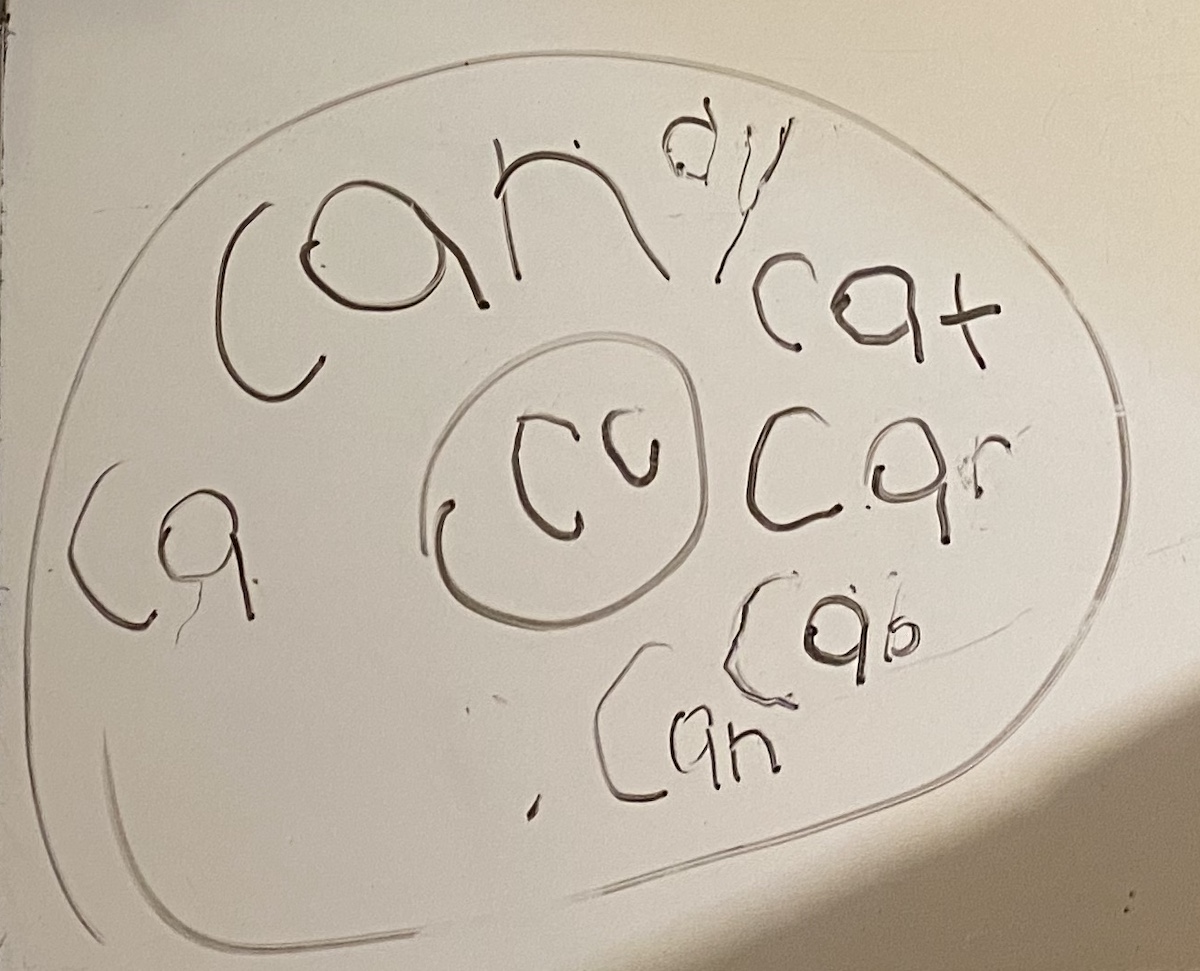
- Do a Circle Map or Anchor Chart to go along with each letter.
- Whichever book number you’re on, call out a word from the word family from it. Child JUMPS says the word, then JUMPS to their side and says a rhyming word. For instance, for the “AT” word family, they could say “MAT” and then “RAT” while jumping back and forth.
- Grab 7 letters or bananagrams letters and try to make as many words as you can in under a minute. Write to the side on a whiteboard or paper to record.
- Write or use tiles to spell out the ending sound of the word family, for example: “at” have them think of all the word family/rhyming words that end with that. Have them put letters with tiles or write the missing letter in front.
- Sort words or pictures into word families or rhyming words.
- Create a book with words sharing the same vowel, belonging to the same word family, or starting with the same sound.
- Create a search and find of the words they are working on. Have to say the word and then find it. Can use pictures instead of the words and they have to spell the word next to the picture, then find it.
- Pick a word from the list. Have the other person write a 3-letter word. (To simplify, tell them what word family/rhyming end it is.) Have them write down the word. If they are correct, circle all the correct letters. If wrong, with the letters that aren’t circled, they have to keep guessing different letters to create new words. They have five turns to guess.
- Create a story and write it with specific words or pictures assigned to it.
- Have the last two letters of the word (or all the letters of the word except for the first letter). Either use Bananagrams tiles or write on an Easter egg and twist to form new words. If using Bananagrams tiles, then you can say if it is a word or not. (The problem with “silly made-up words” is that the child may think it’s a real word because they are reading it, and it can be confusing for them.)
- Make an accordion book and cut out all the pictures that have that sound and put in the book. All the ones that do not, put in the back.
Musical:
- YouTube: Jack Hartmann, English4abc, Scratch Garden, Rock ’N Learn.
- Sort words or pictures into word families or rhyming words.
- Play a musical chairs variation by placing words on the chairs, prompting children to say the word correctly when the music stops and repeat. If correct, take the word away. If wrong, keep the word in the circle.
- Write words on a spinner. Spin the wheel; whatever word you land on, you have to read it in a certain type of voice: singing, laughing, high, low, quiet, loud, etc. Variation: write the words on a spinner in different spots. Spin it and read the word.
- Rhyme Time: Create rhyming pairs or short verses based on given words, fostering a love for rhythm and poetry.
Visual-Spatial:
- Get some sand or play dough. Make the words with play-dough or trace with your finger or a stick in the sand/dirt.
- Do a Circle Map or Anchor Chart to go along with each letter.
- Sort words or pictures into word families or rhyming words.
- Match words with pictures or objects/toys.
- Design a maze of pictures representing similar words, such as those with the same vowel, word family, or starting sound, and connect them from beginning to end.
- Create phrases with words appropriate for their level and act them out or play Pictionary.
- Organize words into different sections on a chart based on their characteristics, like grouping all words and pictures with ‘a’ in one section, ‘e’ in another, and so on.
- Develop a game with a flower/Monster theme where rolling two dice or flipping two cards and adding the numbers corresponds to reading a word correctly to collect a piece of the picture. Assign numbers 2-12 a different word.
- Circle the correct spelling/sound you’re working on for the picture.
- Spell out the words by writing or using Bananagrams tiles. Either use pictures of words or use objects/toys.
- Put pictures from *match the pictures* and put them in the correct labeled bags or bowls that are labeled with the different vowel sounds “a,” “e,” “i,” “o,” and “u.”
- By incorporating these games into your routine, you can enhance your reading in a fun and engaging way. Happy playing!

Book 2: Word Families
Book 2: Word Families
25 Books with 8 pages per book for each word family

@engagethestages
Book 2: Word Families
Book 2: Word Families Activities
9 Activities to do per book and word family

@engagethestages
Book 3: Vowels
Book 3: Vowels
11 Books with 8 pages per book for each word family

@engagethestages
Book 3: Vowels
Book 3: Vowels
100 Pages of Activities to do with vowels

@engagethestages