
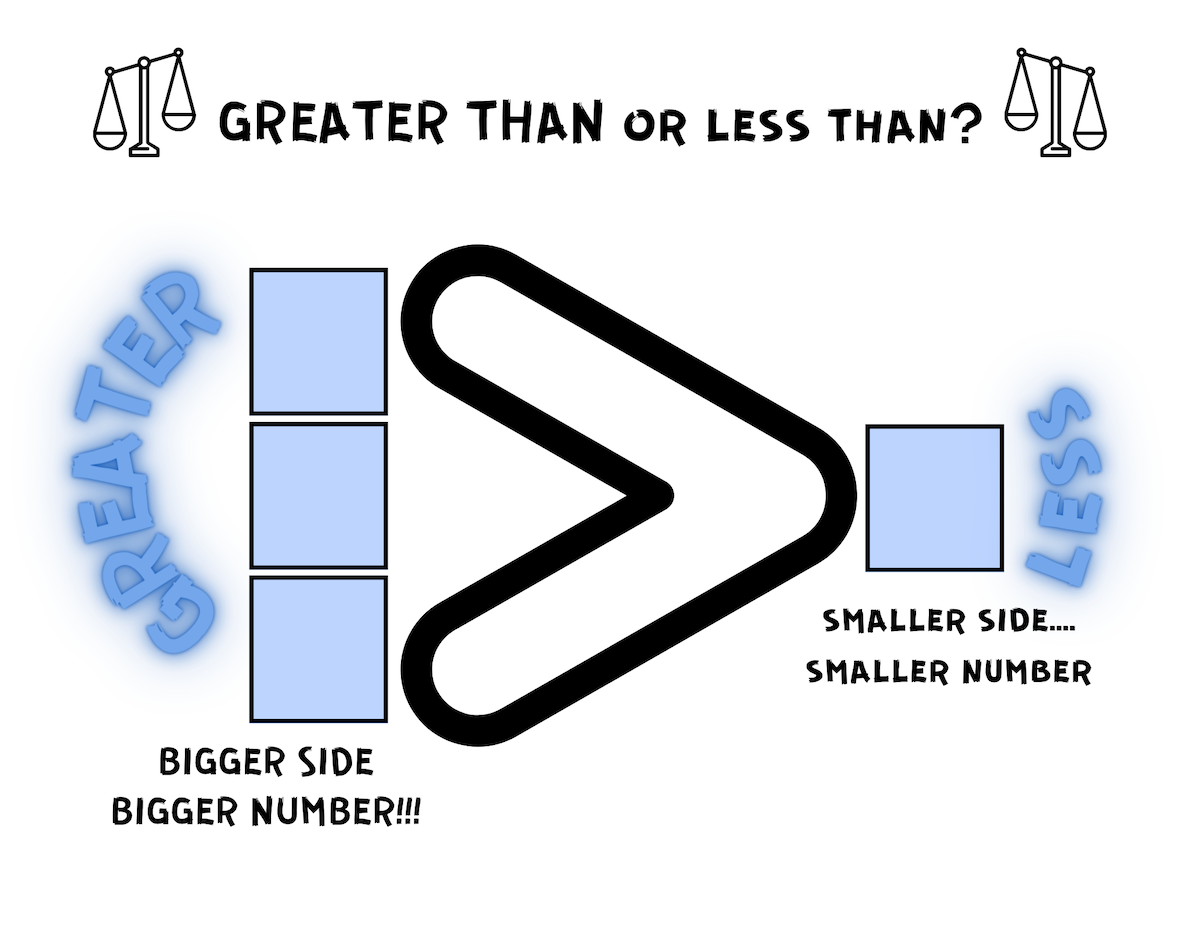
Teaching mathematical concepts like comparing quantities—greater than, less than, or equal to—can be both fun and effective when incorporating diverse learning styles. By leveraging multiple intelligences, educators can create engaging activities that cater to all learners. In this blog post, we’ll explore dynamic strategies, activities, and games that will help students grasp and master comparison concepts with enthusiasm and confidence.
Different Strategies by Multiple Intelligence for Comparing Quantities (Less Than, Greater Than, or Equal)
Logical:
- Data Sorting and Graphing: Students collect data (like favorite colors in the class), create bar graphs, and then compare the heights of bars to discuss which has more, less, or equal votes.
- Number Card Battles: Use playing cards to compare numbers quickly, stating which is greater, less, or equal.
- Equation Puzzles: Provide puzzles where students determine missing numbers based on comparison clues.
- Create two trains, one with numbers less than # and the other with numbers greater than #, then arrange the carts in numerical order as if on a number line.
Linguistic:
- Math Story Problems: Create short stories where characters compare quantities. Students write or narrate their own comparison stories.
- Math Vocabulary Relay: Form teams to race in identifying and explaining comparison symbols and terms.
- Create your own number sentences using <, >, =. For example, “Three is greater than two.” Provide an explanation for your choice.
- Craft a unique story involving <, >, = and numbers.
- Alligator Mouth’ Story: Teach that the “greater than” and “less than” symbols are like an alligator’s mouth, which always eats the bigger number. Students can create their own alligator crafts to use in comparisons.
Books:
- Ready, Set, Hop – Stuart J. Murphy
- More or Less – Stuart J. Murphy
- Tally O’Malley – Stuart J. Murphy
- Just Enough Carrots – Stuart Murphy
Visual:
- Number Line Jump Challenge: Create a large number line on the floor. Students pick two number cards and stand on the corresponding spots. They then discuss which number is greater, lesser, or if they are equal. To make it interactive, have them jump towards the greater number or hop in place if the numbers are equal.
- Comparing Measurement Hunt: Students find classroom objects and measure their lengths. They then compare two objects at a time, recording which is longer, shorter, or if they are equal in length.
- Comparison Art: Draw sets of objects and visually represent greater than, less than, or equal relationships.
- Construct towers with base ten blocks, blocks, or duplo then compare them using <, >, = to create sentences.
- Utilize a scale or craft one with a hanger for comparison.
- Compare different quantities using random objects.
- Use an alligator mouth symbol to represent greater than or less than, indicating which number “eats” the larger one.
- Draw two cards from a deck of cards. Place those number of blocks on each side of a scale. Place the card number below each set of blocks (each side of the scale). Insert the <, >, or = sign between the blocks and form a sentence using numbers.
- Make an alligator on a stick, artwork, or = puppet, and use oversized cards with only numbers or numbers and images for feeding the alligator the larger number.
- Visualizing Box Capacity: Show that more boxes can be accommodated on the larger side of the greater-than sign compared to the smaller side.
- Using a Scale: Observe that more objects weigh more than those on the opposite side. Create a less than or equal sign using pencils and adjust it according to the objects on the scale.
- Comparing Base 10 Blocks: Stack base 10 blocks to assess which group is greater or lesser in value.
- Create two trains – one with numbers less than #, and the other with numbers greater than #. Arrange the cards that match the number sentence, then line up the cards in numerical order like a number line. Feel free to use the provided cards or create your own. Utilize the train with 55<, 55> or devise your custom set with smaller or larger numbers.
Manipulatives:
- Duplo/Lego
- Base ten blocks (tangible, picture, or draw square, line, dots…)
- Number Line
- Cards – playing cards or Uno
- Dominoes
- Number tiles (like Scrabble tiles)
- Tens Frame
- Hundreds Chart
- Monkey Math Scale
- Ruler / Measuring
- Tape
- Beads/Beans… etc.
- Sticks for < sign
Bodily-Kinesthetic:
- Alligator Mouth Game: Create alligator mouths from construction paper representing the greater than (>) and less than (<) symbols. Present two numbers using flashcards, and students feed the alligator the larger number, placing the mouth correctly between the numbers.
- Use hand gestures or arm movements resembling a greater sign or an alligator’s mouth to “chomp” the larger number. For example, you have 4 __ 5 and they have to show the correct sign. Create cards with <, >, = for this activity or simply use your arms to represent the numbers, or write down the correct answer.
- Create a life-size number line using paper, chalk, or a ladder. Display a number like “<3,” and participants must run to a number that fits the statement and stand on it.
- Number Line Challenge: Draw a large number line on the floor using tape. Call out two numbers, and have students stand on the numbers. Prompt them to identify which number is greater, less, or if they are equal, using hand signals (e.g., arms wide for greater than, close together for less than).
- Set up “Four Corners” by placing four or more numbers around the room. Then, add <, >, or = followed by a number, and participants must move to the number that makes the statement correct.
- Twister: Place numbers on the colored dots. You can use playing cards or create your own. Display a number sentence and have participants move to the dot that matches it.
- Take a walk around your house or classroom. Compare different objects to see which ones have more, less, or the same amount.
- Human Number Lines: Students physically arrange themselves in order and use body gestures to show comparisons.
- Comparison Hopscotch: Create a hopscotch grid with numbers, and students hop to the correct answer when asked comparison questions.
- Math Symbol Relay: Create large flashcards with “<“, “>”, and “=” symbols. Divide the class into teams. Show two numbers, and have a relay race where students must run to a board and place the correct symbol between the numbers.
- Greater Than, Less Than Hunt: Hide cards with numbers around the classroom. Give students a comparison statement (e.g., “Find a number greater than 15”) and have them search for a card that fits.
Interpersonal:
- Math Debates: In pairs, students argue why one number is greater, less, or equal to another, justifying with logical reasoning.
- Domino Comparison: Students draw two dominoes and count the dots on each side. They then place a comparison card between the dominoes based on the total dot count.
- Dice Roll Showdown: Pair students and have them roll two dice each. They add their numbers and write the total on the whiteboard. Students then compare totals using the greater than, less than, or equal to symbols.
- Card Comparison: Use a standard deck of cards. Each player flips over two cards. They compare the numbers, deciding which is greater, less, or equal. Players can earn points for correct answers, fostering friendly competition.
- WAR: Play with a deck of UNO or standard cards. Each player flips 1, 2, or 3 cards (with 1-, 2- , or 3-digit numbers). The player with the highest total wins and collects the cards. The player with the most cards at the end wins the game!
- Guess Who? Use a number chart and pick a number between 1 and 100. Let them predict if it is greater or less than the number using < and > symbols or arms for the signs.. Practice asking if a number is greater than or less than, and then cross off numbers on the chart.
- Flip a card (or multiple cards for a multi-digit number) from a deck and compare values to see who has the higher card. The player with the highest card collects all the cards. The winner is the person who holds the most cards at the end.
- Number Guessing Game: Utilize a 100’s chart and attempt to guess the number by asking questions that require answers of “larger than” or “less than.”
- Dice Duel: Have students roll two dice. They write down the numbers and use the correct symbol to compare them. To add complexity, use dice with more sides or combine the numbers to form two-digit numbers.
Musical:
- Comparison Songs: Write simple jingles or raps about greater than, less than, or equal concepts.
- Rhythm Patterns: Create beats representing different quantities, and have students identify which rhythm has more, less, or equal beats.
- YouTube: Math & Learning Videos – Comparing Numbers, Brainzy: Number Gators, NumberRock: Greater than Less than Song, Jack Hartmann: Mr Alligator can chomp small numbers, Jack Hartmann: Mr Alligator can chomp double digits, GoNoodle: Hallabaloo >, <, =
Nature:
- Nature Collection Comparison: Compare leaves, rocks, or other natural items based on size, count, or weight.
- Weather Data Analysis: Analyze temperature data to determine which days are hotter, cooler, or the same.
- Compare the number of trees to flowers. Compare the height of trees and write a sentence about it.
- Compare different types of toys.
Intrapersonal:
- OSMO Math Wizard Game – balloons/dragon
- Apps: Khan Academy Kids, Khan Academy, IXL Math Seeds (on Reading Eggs)
- NCTM APP: Number Pieces
- Online Games: MathNook, Wordwall – comparing numbers, MathPlayground Monster Stroll, MathPlayground Math Surpass – compare numbers
Mastering the concepts of greater than, less than, or equal to doesn’t have to be a mundane task. By integrating strategies that appeal to various intelligences and learning styles, teachers can make lessons interactive, engaging, and memorable. Whether through hands-on activities, comparison games, or creative storytelling, students can develop a strong understanding of comparing quantities in a way that resonates with them personally. Try out these activities in your classroom and watch your students’ mathematical thinking flourish!
Get Your Greater Than or Less Than Packet:
Greater Than/Less Than
Over 40 Pages of Games and Activities Already Made Up

@engagethestages