
Strategies and Hands-On Math Investigations for Solving Multiple-Digit Addition Problems
Linguistic Intelligence
- Math Story Problems: Create a short story featuring characters who face obstacles that require solving multi-digit addition problems to proceed. Students read the story and solve each problem to help the characters advance.
- Addition Relay: Divide students into teams. One student solves a problem on the card, then passes it to the next teammate who solves the next problem. Continue until all problems are solved.
- Word Problems: Design real-life scenarios, like planning a party or shopping, where students apply multi-digit addition to calculate totals, budgets, or distances. Encourage them to create their own word problems to deepen comprehension.
- Storytelling: Create math stories where characters face problems that require solving multi-digit addition, such as helping a farmer count apples in baskets. Students can narrate, write, or act out these stories.
Books:
- 100 Snowmen – Jen Arena
- 100 Hungry Ants – Elinor Pinczes
- 365 Penguins – Jean-Luc Fromental
- The Penny Pot – Stuart J. Murphy
- Fair Bear Share – Stuart J. Murphy
- Mall Mania – Stuart Murphy
- Sir Cumference and the Roundabout Battle
- Coyotes All Around – Stuart Murphy
- The Big Buck Adventure – Shelley Gill
Logical-Mathematical Intelligence
- Math Puzzles: Use number puzzles, Sudoku variants, or logic grids that involve multi-digit addition.
- Traditional Algorithm: Write numbers in a column, aligning by place value. Starting from the right (ones place), add the digits: If the sum is 10 or more, write the units digit and carry over the tens digit. Repeat this process moving left. Example: 567 + 289. Add ones: 7 + 9 = 16 (write 6, carry over 1). Add tens: 6 + 8 = 14 + 1 (carry) = 15 (write 5, carry over 1). Add hundreds: 5 + 2 = 7 + 1 (carry) = 8. Final answer: 856
- Partial Sums Method: Break down numbers into hundreds, tens, and ones. Add these separately (e.g., 456 + 378: add 400 + 300, then 50 + 70, then 6 + 8) and combine the partial sums.
- Breaking Down the Problem (Decomposition Strategy): Write down the numbers vertically, aligning them by place value. Decompose each number into place values (e.g., 456 as 400 + 50 + 6). Add the corresponding place values: Add hundreds: 400 + 300 = 700. Add tens: 50 + 20 = 70. Add units: 6 + 8 = 14. Combine these sums: 700 + 70 + 14 = 784. Use place value cards.
- Estimation Strategy: Round each number to the nearest ten or hundred. Add the rounded numbers. Use this estimate to check the reasonableness of your final answer.
- Mental Math with Friendly Numbers: Identify numbers close to multiples of 10 or 100. Add these friendly numbers first. Adjust by adding or subtracting the difference.
- Compensation Strategy: Adjust one number to make it easier to add (e.g., round up). Add the adjusted number. Subtract the compensation to correct the sum.
- Number Tiles: Grab some number tiles and label the backs with +, -, x, /, and = signs. Select 7 tiles and form number sentences with these 7 numbers and use the +, -, x, /, and = from the other tiles not being used at the time. Then, in a turn-based manner, connect your number sentences with a partner like you would connect words in a game of Scrabble.
- Calculator Race: Pair students. One solves problems mentally while the other uses a calculator. Compare results to see who finishes first with correct answers.
- Begin by adding two- digit numbers, then move on to three-digit numbers. Apply your knowledge to add 10 digits by 10 digits! Make the numbers as long as you want to add.
Visual – Spatial Intelligence
- Number Line Race: Use large number lines for students to physically jump and add numbers.
- Math Art: Create colorful mosaics where each section’s color is determined by solving an addition problem.
- Lattice Addition Method: Draw a grid with diagonal lines dividing the boxes. Place one number along the top and another down the side. In each box, write the sum of the digits, with the tens above the diagonal and ones below. Add along the diagonals to find the final sum.
- Color-Coded Vertical Addition: Use different colors to highlight each place value column (ones, tens, hundreds). This helps students focus on one column at a time, reducing confusion when carrying over.
- Number Line Jumps: Draw a number line and start from the larger number. Make jumps in increments based on place values (e.g., add hundreds first, then tens, then ones) to visually represent the addition process. Example: 245 + 378. Start at 378. Jump +200 to 578. Jump +40 to 618. Jump +5 to 623
- Adding with Objects: Pick four cards at random from a deck to make two double digit numbers. Place them in the designated “Random Card 1” and “Random Card 2” spots. Use number blocks or number coins to represent the card numbers above each spot. Identify cards with a matching value and place it in the “Equal Card” pile, then place the corresponding number of tiles or coins underneath it.
- Add on a grid to line up the numbers.
- Use playing cards. Put a rubber band around the stacks of ten.
- Add on a hundreds chart.
- Number bond and part-part-whole for adding.
- Using a measuring tape or number line up on the wall. Flip cards and add or subtract along the number line. Whoever makes it to the target number first, wins.
Manipulatives:
- Duplo/ Lego/ Base ten blocks (tangible, picture, or draw square, line, dots…)
- 100, 10’s, 1’s coins
- Number Line
- Monopoly money/Fake Money / Coins
- Cards – playing cards, Uno, or Skipbo
- Dominoes
- Number tiles (like Scrabble tiles)
- Beads (like Montessori but make your own)
- Tens Frame
- Number Bond
- Part-Part-Whole
- Hundreds Chart
- Beads, Beans, play- doh, etc.
- (Monkey Math) Scale
- Ruler/ Measuring Tape
- Place Value Cards
- Pokemon Cards
Bodily-Kinesthetic Intelligence
- Addition Hopscotch: Draw a hopscotch grid with numbers. Students hop and add numbers where they land.
- Using Base-Ten Blocks: Represent each number with base-ten blocks (hundreds, tens, and ones). Physically combine the blocks. Group ones and tens as needed to form new tens or hundreds. Count the total blocks to find the sum.
- Human Number Line: Create a large number line on the floor. Students physically jump or step to represent the process of adding numbers, reinforcing concepts through movement.
- Math Movement Activities: Develop gestures or simple dances for different math operations, such as clapping for carrying over or stepping in place for each addition step.
- Use a life-size ten frame to practice addition.
- Create a life-sized number bond using chalk on the ground, or large bowls, and using two different colored objects to place in cups or to dump.
- Twister: Place equations on the various circles. Spin the spinner. If it lands on yellow, players must select a yellow circle and solve the equation before placing their hand or foot on it.
- Write double or triple- digit numbers on ping pong balls, Then throw them into bowls with random numbers written on the outside of them. Add the numbers on the ping pong ball to the bowl. Alternatively, you can write numbers on strips of paper for the same activity.
Musical Intelligence
- Addition Songs: Encourage students to compose and perform songs that explain steps in multi-digit addition.
- Math Songs: Sing songs about carrying over in addition or number relationships.
- YouTube: Math&Learning Videos 4 kids – Double Digit Addition with Regrouping, Numberock – addition with regrouping, Mr. R’s Songs for Teaching – Decomposition in Addition!, Mr. R’s Songs that Teach – You Carry Over, Gary Eisenberg – Addition Regrouping, Maddy Krebs – Blank Space Addition
Interpersonal Intelligence
- Math Peer Teaching: Students pair up to teach and quiz each other on addition strategies.
- Addition Board Games: Use cooperative board games where players solve problems to advance.
- Write random double or triple-digit numbers on popsicle sticks. Include around five sticks labeled “SNAP.” Participants should draw two sticks and add the numbers together. If they provide the correct sum, they keep the sticks; otherwise, they return them. If they draw the “SNAP” stick, they must return all the sticks to the cup.
- Use Pokemon Cards and engage in a fast battle using the double digit numbers on them to add.
- Use cards or dice and add them quickly in the game.
- Use number coins instead of number blocks for addition.
- Boggle: Set a target number and lay out random number cards. The goal is to find pairs of cards that add up to the target number.
- Flip Cards for Addition: Instead of writing the sums, use cards to represent the total. Flip cards to find the sum.
- Target Number Challenge: Select a random target number and aim to add cards together to reach that total.
- Deck of Cards Game: Use a deck of cards, flipping them to add up the values. For a twist, if two identical cards stack on top of each other, the first player to slap them wins the entire deck. The player with the most cards at the end is the winner.
- Hundreds Chart Addition: Flip a card or roll a die to generate a number. Start at 1 and continue adding until you reach 100.
- Wheels of Addition: Create two wheels marked with random numbers. Spin a paperclip to select two numbers and add them together.
- Pyramid of Addition: Use cards with numbers (or write them on a whiteboard). Pick adjacent cards to add, then discard or erase the numbers used, working your way up the pyramid.
- Domino Addition: Treat each domino as a double-digit number and add them. Turn it into a game to see who can achieve the highest sum.
- Number Board Game: Create a board filled with random numbers. Move around by flipping a card. When you land on a number, add it to the value of the flipped card. If you’re correct, you stay; if not, return to your previous position.
- BINGO Board: Design a BINGO board with math challenges.
- Mathopoly, Battleship, Jeopardy, or Snakes and Ladders: Create variations of popular games, incorporating math elements to enhance the fun!
- Everyone receives 5 quarters, 7 dimes, 9 nickels, and 11 pennies. Flip two cards (to make a double digit number) and pay the bank the corresponding amount. If necessary, exchange larger coins for smaller ones. Continue this process until you have used up all your money.
Board Games:
- Prime Climb
- Cover your Assets
- Mille Bornes
- Adsumudi
- Mountain Raiders
Intrapersonal Intelligence
- Math Journals: Encourage self-reflection by writing about strategies used and problem-solving processes.
- Take out a few coins and explore various combinations to reach the same total. Alternatively, create different card combinations that add up to the same amount using various coins. For instance, 2 quarters could equal 5 dimes, and so on.
- OSMO: Fish (number tiles), Math Wizard (Magical Workshop & Amazing Airships)
- APPS: IXL, Khan Academy, Duck Duck Moose Bingo, Kid math Fun
- NCTP APP: Money Pieces, Number Line, Number Pieces
- Online Games: Math Playground – Undercover Math Addition, Math Playground – Amusement Park, Math Playground – Galaxy Pals 100, Arcademics – Canoe Puppies, Funbrain – Math Baseball, Math Playground – Code Sums
Naturalistic Intelligence
- Outdoor Math Scavenger Hunt: Find and add up numbers found in nature (tree rings, petals, etc.).
- Outdoor Math Investigations: Apply addition concepts during outdoor activities or scavenger hunts.
- Add things in nature.
- Count the number of flowers or leaves, and write down the equation in the dirt.
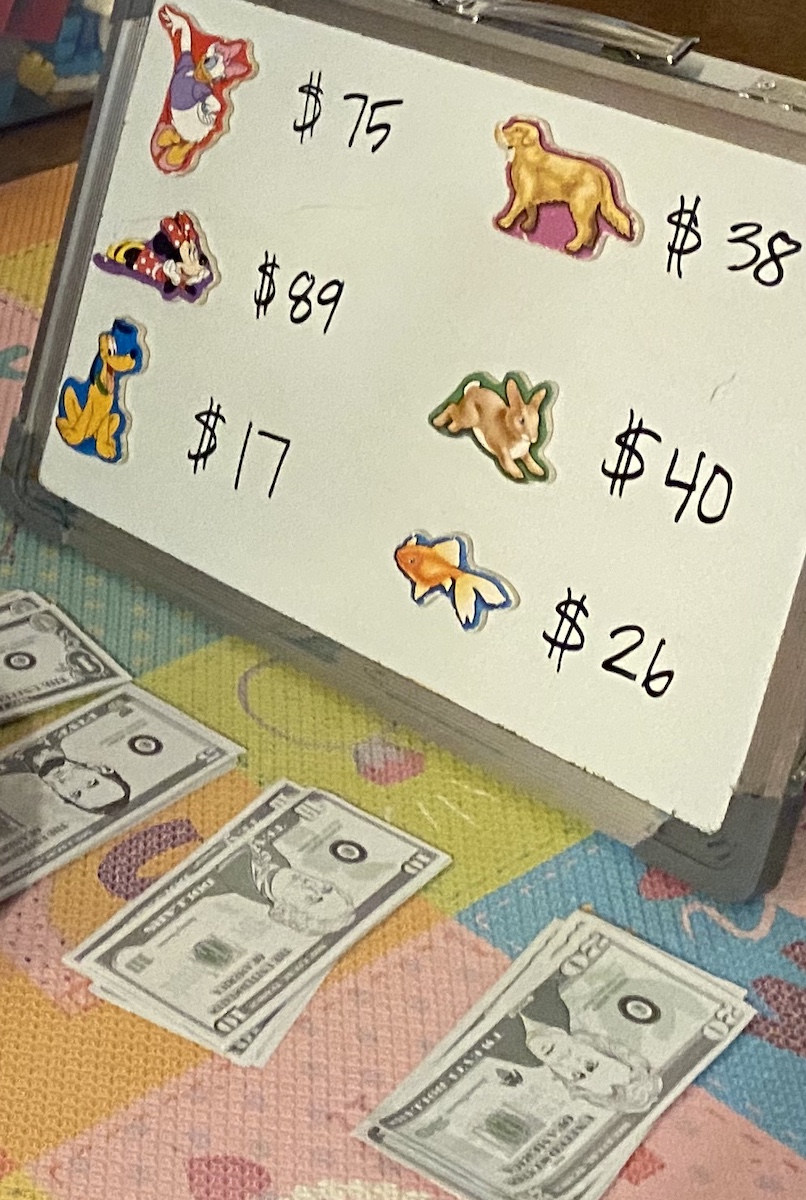
- Grocery Store: Go to the grocery store and add items you can buy or do buy. Or create your own grocery store (or magnets/stickers) and add the different objects and use fake money to buy.
These activities cater to diverse learning styles, making multi-digit addition engaging and effective.
Get Your Double-Digit Addition Concepts Packet:
Double-Digit Addition Investigations
Over 90 Pages of Concepts Already Made Up

@engagethestages
Get Your Double-Digit Addition Games Packet:
Double-Digit Addition Games
Over 90 Pages of Games Already Made Up

@engagethestages