
Double-digit subtraction can be an exciting and dynamic learning experience when tailored to diverse learning styles. By integrating activities that cater to multiple intelligences—including linguistic, logical-mathematical, visual-spatial, bodily-kinesthetic, musical, interpersonal, intrapersonal, and naturalistic—students can engage in meaningful, hands-on experiences that foster both understanding and enthusiasm for math. This comprehensive collection of activities, from subtraction storytelling to nature-based problem-solving, aims to make subtraction relatable, interactive, and fun for every learner.
Here are engaging double-digit subtraction activities designed to cater to various multiple intelligences:
Linguistic Intelligence:
- Subtraction Storytelling: Students create stories based on subtraction problems, narrating scenarios like “Emma had 72 marbles and gave 29 to her friend. How many does she have left?”
- Subtraction Story Problems: Create real-life scenarios (e.g., “You had 784 candies and gave 356 to friends. How many do you have left?”). Students act out or draw the subtraction process.
- Math Journal Reflections: Encourage students to write about their subtraction process, explaining steps and reasoning.
Books:
- Shark Swimathon – Stuart J. Murphy
- 100 Days of Cool – Stuart J. Murphy
- Alexander, Who Used to Be Rich Last Sunday – Judith Violist
Logical-Mathematical Intelligence:
- Subtraction Puzzle Cards: Create puzzle cards with missing digits in multi-digit subtraction problems. Students solve for missing numbers using logical reasoning.
- Subtraction Patterns Discovery: Explore patterns when subtracting multiples of 10 and discuss observations.
- Begin by subtracting two-digit numbers, then move on to three-digit numbers. Apply your knowledge to subtract 10 digits by 10 digits! Make the numbers as long as you want to add.
- Number Tiles: Grab some number tiles and label the backs with +, -, x, /, and = signs. Select 7 tiles and form number sentences with these 7 numbers and use the +, -, x, /, and = from the other tiles not being used at the time. Then, in a turn-based manner, connect your number sentences with a partner like you would connect words in a game of Scrabble.
- Make a group of 3-4 subtraction problems. Cross out the one that doesn’t belong (the one that doesn’t have the same answer).
Visual – Spatial Intelligence:
- Subtraction Art: Create artwork where each subtraction problem solved correctly adds to a bigger picture.
- Place Value Blocks Subtraction Investigation: Use base-ten blocks to visually represent large numbers. Physically remove blocks to subtract, regrouping as needed.
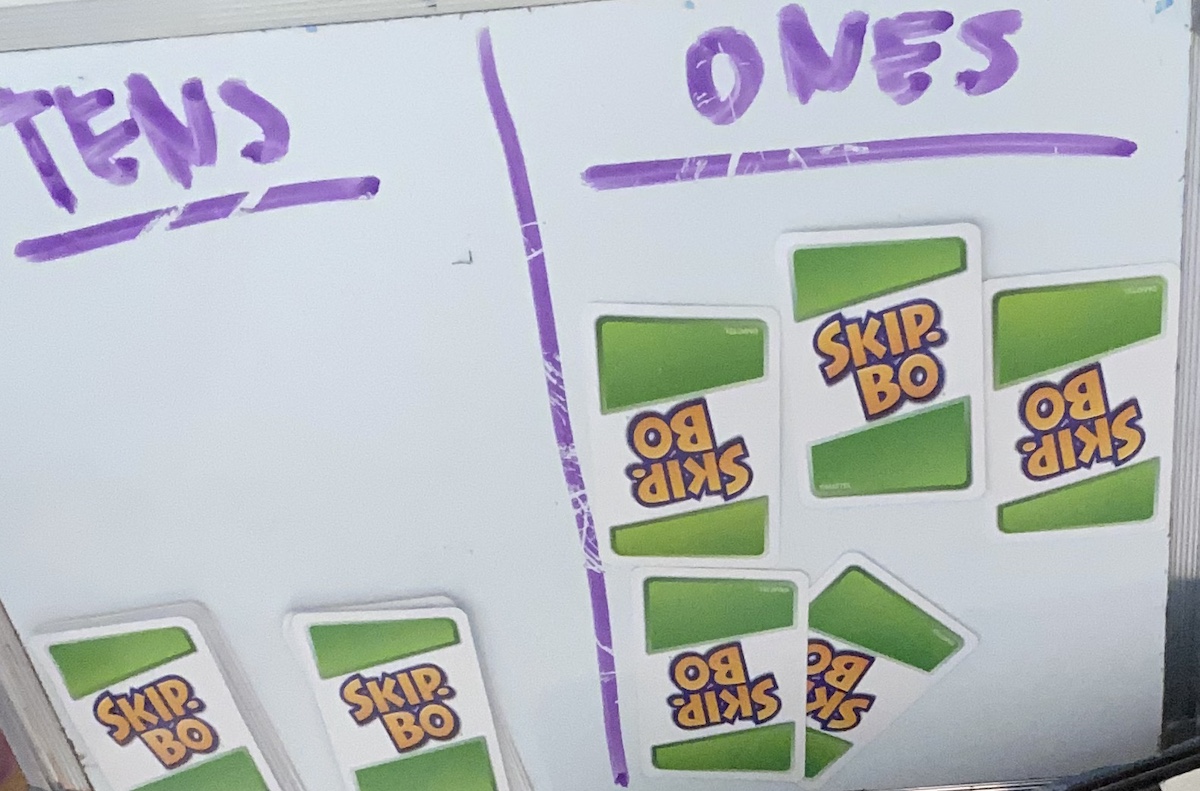
- Place Value Number Cards Subtraction Investigation: Use place value number cards to visually represent large numbers. Physically remove cards to subtract.
- Number Line Jump Subtraction: Use a large floor number line or draw one on a piece of paper. Start at the larger number, then make backward jumps for hundreds, tens, and ones to visualize subtraction.
- Money-Based Subtraction Activity: Use play money to simulate purchases. Subtract amounts by giving change, reinforcing place value concepts.
- Regrouping with Straws or Sticks: Bundle straws, sticks, or cards into groups of ten. Subtract by breaking bundles when regrouping is required, providing a tactile experience.
- Color-Coded Column Subtraction: Use colored pencils for each place value (ones, tens, hundreds) while solving subtraction problems to highlight where regrouping occurs.
- Interactive Whiteboard Subtraction Challenge: Use an interactive whiteboard where students drag virtual base-ten blocks or numbers to solve subtraction problems with guidance.
- Hundreds Chart: Subtract double digits on a hundreds chart.
- Number Bond and Part-Part-Whole Subtraction: use number bonds or part-part-whole charts to fill in.
- Use lines for tens and circles for ones and subtract by drawing out the numbers with lines and circles.
- Regroup with boxes over each place value spot to fill in if needed.
- Grid: Subtract on a grid to keep the numbers in order.
- Subtracting with Objects: Pick four cards at random from a deck to make two double digit numbers, with the higher number first. Place them in the designated “Random Card 1” and “Random Card 2” spots, with the higher number first. Use number blocks or number coins to represent the card numbers above each spot. Identify cards with a matching value and place it in the “Equal Card” pile, then place the corresponding number of tiles or coins underneath it. As a variation, you can compare the two quantities visually by lining up the objects side by side and finding the difference.
- Take out a few coins and explore various combinations to reach the same total. Alternatively, create different card combinations that add up to the same amount using various coins. For instance, 2 quarters could equal 5 dimes, and so on.
Manipulatives:
- Duplo/ Lego/ Base ten blocks (tangible, picture, or draw square, line, dots…)
- 100, 10’s, 1’s coins
- Number Line
- Monopoly money/Fake Money / Coins
- Cards – playing cards, Uno, or Skipbo
- Dominoes
- Number tiles (like Scrabble tiles)
- Beads (like Montessori but make your own)
- Tens Frame
- Number Bond
- Part-Part-Whole
- Hundreds Chart
- Beads, Beans, play- doh, etc.
- (Monkey Math) Scale
- Ruler/ Measuring
- Tape
- Pokemon Cards
- Use Number Coins instead of Number Blocks.
Bodily-Kinesthetic Intelligence:
- Subtraction Relay Race: In teams, students solve subtraction steps on large posters, physically moving between steps. Each student completes a step before tagging a teammate to continue.
- Human Number Line: Students act as numbers on a giant floor number line, stepping backward to demonstrate subtraction.
- Create a life-size number line by adding numbers and physically moving or jumping to each point.
- Use a life-size ten frame to practice addition.
- Create a life-sized number bond using chalk on the ground, or large bowls, and using two different colored objects to place in cups or to dump.
- Twister: Place equations on the various circles. Spin the spinner. If it lands on yellow, players must select a yellow circle and solve the equation before placing their hand or foot on it.
Musical Intelligence:
- Subtraction Songs: Teach subtraction rules through catchy tunes, emphasizing regrouping strategies.
- YouTube: Count backwards from 100 – Jack Hartmann, Numberock – subtraction with regrouping song, Mr. WaWa – The Borrowing Song – Regrouping, The Math Party – Regrouping Subtraction, Math & Learning Videos 4 Kids – Subtraction with regrouping
Interpersonal Intelligence:
- Partner Problem Solving: Students work in pairs, explaining subtraction steps to each other.
- Dice Roll Subtraction Game: Roll dice to generate multi-digit numbers. Subtract the smaller number from the larger and record the process, regrouping if necessary.
- Everyone receives 5 quarters, 7 dimes, 9 nickels, and 11 pennies. Flip two cards (to make a double digit number) and pay the bank the corresponding amount. If necessary, exchange larger coins for smaller ones. Continue this process until you have used up all your money.
- Subtraction Role-Play: Simulate shopping scenarios where students “buy” items and make change.
- Use Pokemon Cards and engage in a fast battle using the double digit numbers on them to find the difference (bigger number first).
- Use cards or dice and subtract put the larger one first quickly in the game.
- Write double or triple-digit numbers on ping pong balls, Then throw them into bowls with random numbers written on the outside of them. Subtract the numbers on the ping pong ball to the bowl. Alternatively, you can write numbers on strips of paper for the same activity.
- Write random double or triple-digit numbers on popsicle sticks. Include around five sticks labeled “SNAP.” Participants should draw two sticks and subtract the numbers. If they provide the correct difference, they keep the sticks; otherwise, they return them. If they draw the “SNAP” stick, they must return all the sticks to the cup.
- Boggle: Set a target number and lay out random number cards. The goal is to find pairs of cards that subtract to the target number.
- Flip Cards for Subtraction: Instead of writing the differences, use cards to represent the total. Flip cards to find the difference.
- Target Number Challenge: Select a random target number and aim to subtract cards together to reach that total.
- Deck of Cards Game: Use a deck of cards, flipping them to subtract the value from 99 or higher. For a twist, if two identical cards stack on top of each other, the first player to slap them wins the entire deck. The player with the most cards at the end is the winner.
- Hundreds Chart Subtraction: Flip a card or roll a die to generate a number. Start at 100 and continue subtracting until you reach 1.
- Wheels of Subtraction: Create two wheels marked with random numbers. Spin a paperclip to select two numbers and subtract them.
- Pyramid of Subtraction: Use cards with numbers (or write them on a whiteboard). Pick adjacent cards to find the difference, then discard or erase the numbers used, working your way up the pyramid.
- Domino Subtraction: Treat each domino as a double-digit number and subtract them. Turn it into a game to see who can achieve the lowest difference.
- Number Board Game: Create a board filled with random numbers. Move around by flipping a card. When you land on a number, find the difference of the two values to the value of the flipped card. If you’re correct, you stay; if not, return to your previous position.
- BINGO Board: Design a BINGO board with math challenges.
- Mathopoly, Battleship, Jeopardy, or Snakes and Ladders: Create variations of popular games, incorporating math elements to enhance the fun!
Board Games:
- Prime Climb
- Cover your Assets
- Mille Bornes
- Adsumudi
- Shut the Box
Intrapersonal Intelligence:
- Independent Puzzle Solving: Quiet, self-paced logic puzzles focusing on subtraction.
- OSMO: Fish (number tiles), Math Wizard (Magical Workshop & Amazing Airships), Pizza
- APPS: IXL, Khan Academy Kids, Pet Bingo (Duck Duck Moose), Park Math, Moose Math, MathSeeds (on reading eggs)
- NCTM APP: Number Line, Number Pieces, Number Frame
- Online Games: Wordwall, Math Playground – Brain Workout Missing Digit, Funbrain – Math Baseball, Math Playground – Code Sums
Naturalistic Intelligence:
- Nature-Themed Subtraction: Use objects like leaves or stones to physically represent and subtract quantities.
- Eco-Math Projects: Create subtraction problems based on environmental data, like tracking water usage reductions.
- Subtract things in nature.
- Count the number of flowers or leaves, and write down the equation in the dirt.
Incorporating these engaging double-digit subtraction activities into the classroom ensures that students connect with mathematical concepts in ways that resonate with their unique strengths. By appealing to various multiple intelligences, educators can create an inclusive environment where every child feels confident and motivated to explore subtraction. Ultimately, these diverse approaches not only enhance comprehension and retention but also cultivate a lifelong appreciation for the beauty and versatility of mathematics.
Get Your Double-Digit Subtraction Concepts Packet:
Double-Digit Subtraction Investigations
Over 90 Pages of Concepts Already Made Up

@engagethestages
Get Your Double-Digit Subtraction Games Packet:
Double-Digit Subtraction Games
Over 90 Pages of Games Already Made Up

@engagethestages