
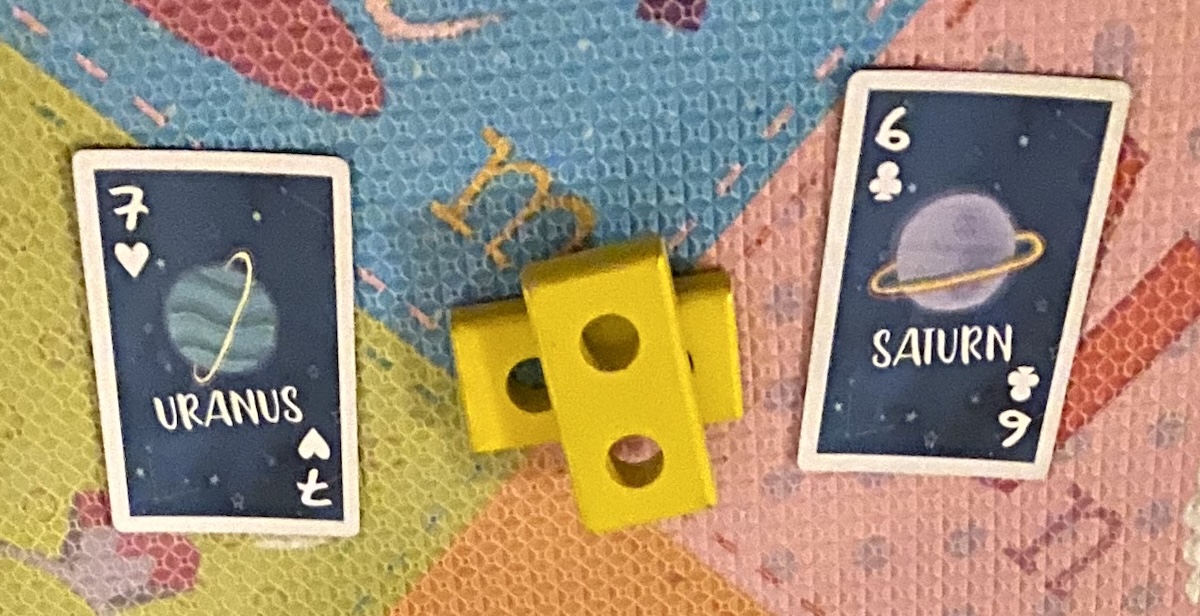
Math fact games and activities to do with addition. Activity sheets already made up in the packet on the bottom of the page with these activities and more!
- Double-Double-Trouble: Draw a card from a deck of cards. The number you pick double it. First person to say the answer wins the cards. The most cards in the end, wins! For example if you draw a 3 double it and it’s 3+3=6.
- BINGO Double Double: Write in the answers to doubles like 2, 4, 6, 8, 10, 12, 14, 16, 18, and 20. Pull out a card from a deck of cards (or roll a die). Double the card you get and then cross off the answer. First person to get 3 in a row or all all of the spaces marked off, wins!
- Same Number or Shape/Color Add: Everyone gets 7 cards. Put the deck of cards in the middle of everyone and flip the top card. Each person takes turns and lays a card on top of it that is either the same number or shape/color. Add the number you’re laying down to the number in the center. If correct, you can get rid of the cards. If you can’t move, draw another card. First person to empty their hand of cards, wins!
- Pyramid of Addition: Lay out cards or write in numbers in a pyramid shape. You can erase or take off two numbers that are next to each other if saying the sum of them correctly first. Goal is to get rid of all the numbers.
- Biggest Sum: Split a deck of cards between two players. Each player flips two cards and adds their numbers. The person with the biggest sum wins the cards. Go through your deck of cards, whoever has the more cards in the end, wins.
- Shaped: Draw a shape. On the corners of the shape write the numbers 2-20. Flip two cards and add them. Find the sum on the shape and cross it out. First person to cross out all of their numbers wins.
- Around & Around: Either write numbers or lay out cards in a swirl (like candy land type of board) or a big circle. Start at one end and roll the die. Got that many spaces. The number you land on add it to the number you rolled (or card flipped). If you add correctly then stay there. If wrong, go back to your original spot.
- Towers: flip two cards and add them. Make a tower out of their sum with two different colored duplo blocks or all the same colored blocks. Compare the shapes of the different towers.
- Towers of 10. Start by flipping one card, then flip another card and add the numbers together. Grab some Duplo blocks and stack them on top of each other (or draw squares on top of each other). Flip another card and add that number to the tower. When you reach a tower of 10, any remaining blocks can be used to create a new tower. Continue building and flipping cards until you’ve used up all the Duplo blocks.
- Tic-Tac-Toe: Make a board of numbers 1-9 or 2-20. Select two cards from a deck. Add the numbers. Cross off the sum on the board. Alternatively, roll two dice, add the numbers, and cross out the answer. The first player to achieve three in a row wins!
- Boggle: Pick a target number. Set out a bunch of cards or number tiles. Use the cards or tiles to make equations that equal the target number.
- To 10: Addition: Every player flips over 2 or 4 cards from the deck. Utilize 2 cards to form an equation equaling 10 or as close as possible without exceeding it. Document your result and calculate the difference. For instance, if you have 8 & 1, the total is 9, making the difference to 10 equal to 1. The player with the smallest difference wins the round. Proceed with 9 rounds. Determine the player with the most wins.
- War: Flip two cards from a deck or split the deck into two for each player to flip a card. The first player to correctly add up the numbers wins and keeps the cards. The player with the most cards at the end wins! Variation Game: Split the deck and both players reveal their two cards and adds them. The player who solves their problem first wins the round!
- Go Fish: Deal five cards to each player (or to yourself if playing alone). Place the deck in the center or on top of this paper. Select a number that all players need to add up to with the cards in their hands. Request numbers from others to form a pair that matches the target number. Once a matching pair is found, lay them down on your paper. Try to get 6 pairs first. Variation: Draw a card from the deck that everyone needs to match. Once a pair is formed, draw a new card to add up to.
- Poof: Deal 6 cards and place them on your paper (or roll 6 dice on your paper). The objective is to obtain the smallest total number possible! Here’s a trick: if there are any pairs that add up to 10, those cards vanish magically, and you can turn them over so they don’t contribute to your final score. Sum up the remaining cards, and the player with the smallest total wins. Each player should keep a record of their scores on a separate sheet of paper to track their lowest score.
- Trade Ya: The objective is to obtain the HIGHEST number. Arrange 8 cards in a row face down without peeking at them. Keep an unused pile in the middle, above a sheet of paper. Turn over one card. During your turn, reveal two face-down cards on the paper. You have the option to keep them or swap one for the top card. (Variation: Trade with another player.) On the following turn, draw from the pile, exchange it with a face-down card, and then return it to the pile. You can either keep the card or trade it with any visible card. Once all cards are revealed, determine who has the highest total to win. Clear the board and continue playing until the deck is exhausted.
- I Spy: Let’s play a game of “I Spy” with a twist: Lay out 8 cards face up on the board. Take turns describing two cards that either add, subtract, or multiply to a specific number. For instance, you could say, “I spy two cards that add up to 14.” The other player has to guess the correct pair of cards to win them. If they guess right, they get to keep the cards and two new ones are added to the board. Keep taking turns, and the player with the most cards at the end wins.
- War Add: Deal six cards to each player, or play solo. Place the deck of cards in the center or on top of this paper. Flip a card and aim to add to that number with the numbers on the paper or in your hand. Combine two cards in your hand or on the paper to add to that number.
- Equation Order: Take equation cards and order them from smallest to largest (the answers). Draw 4 equations at a time.
- Level Up: Place a random card in the box.Each player can hold 5 cards. During your turn, you must lay down a card that follows the sequence by being one number higher. If unable to play a card, draw a card and place a new card in the middle box. The first person to empty their hand wins! Once the child is confident with adding on, introduce subtracting by playing with one less card. Progress to allowing either adding or subtracting when comfortable with both. Alternatively, instead of 5 cards, scatter the cards face up for more flexibility in gameplay. Extension: Gather objects based on the number shown on the card. When adding or subtracting, adjust the objects accordingly.
- Domino War: Place a domino in the box and add the numbers together. The first person to correctly add them wins. Keep a record of the dominoes below. Alternatively, use two dominoes and add up all four numbers.
- Make that Number: Select a target number (e.g., 10, 11, 12, 13, 14, 15, 16, 17, 18). Play with a partner by dividing the deck in half and flipping 4 cards each, or play solo by flipping 8 cards. Match pairs of cards that add up to the target number (e.g., for a target of 10, 2&8 is a valid pair). Collect matching pairs and continue flipping new cards. The first person to emptytheir hand wins in a partner game. If playing solo, when you’ve gone through the deck.
- Clear the Board: You can play individually or with a partner. Either divide the deck or have each player draw two cards during their turn. The first person to clear all their numbers is the winner! Place a small item such as a bean, bead, or Cheerio to each number, or mark off the numbers as you progress. (Variation: Each player receives 10 beads and can place them on the board as they wish. For instance, they can place 5 beads on 5 and the remaining on 7. Only one bead can be removed at a time.) Roll two dice or flip two cards, add the numbers together, and remove the corresponding item from the answer on your board. . If incorrect, you cannot remove the item. Variation 1: If you roll two dice and you get 2 and 4, totaling 6, you can remove other numbers that add up to 6 like 1 and 5, or 3. Variation 2: Choose a target number (e.g., 10). Draw a card, and remove the marker on the number that, when added to the drawn card, equals 10. For instance, if you draw a 3, remove the marker on 7 because 3 + 7 = 10.
- Spider Math: Write out number 2-20. What plus what equals what? Fill in the blanks with numbers: ______ + _______ = ________. Choose a target number, for example, 10. Then, connect all the numbers that add up to 10 by drawing lines, like 0 + 10 = 10.


This and more math investigations and games are included here:
Introduction to Adding Packet:
High-Quality Introduction to Adding Packet
Introduction to Adding
Over 100 pages of games and activities to practice adding and understanding the concept of adding

@engagethestages