
Why It’s Important:
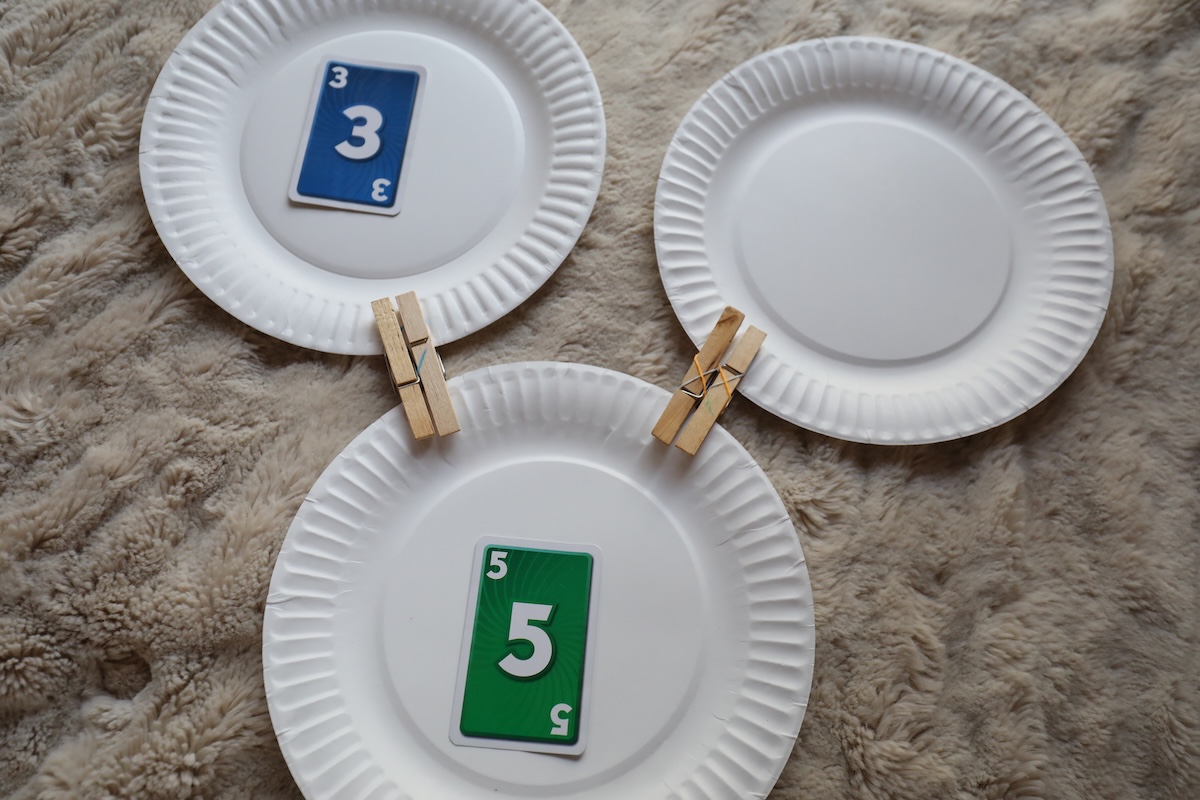
Understanding addition through the concept of a target number with hidden parts helps children develop strong number sense. It encourages mental math, fosters critical thinking, and lays the foundation for understanding part-whole relationships, which are essential in more advanced mathematical concepts.
Steps to Teach Addition with a Target Number (5) and Hidden Parts:
- Introduce the Concept of a Target Number:
- Explain to the child that today’s goal is to find ways to make the number 5.
- Show them 5 small objects (like blocks, counters, or coins).
- Demonstrate the “Hiding” Method:
- Place all 5 objects in front of the child.
- Cover some of the objects with a cup or your hand, leaving the rest visible.
- Ask, “How many can you see?” Count them together.
- Then ask, “If we need 5 in total, how many are hiding?”
- Encourage Predictive Thinking:
- Allow the child to guess how many are hidden based on what they can see.
- Lift the cover to reveal the hidden objects and count them together to check their answer.
- Relate to Addition Sentences:
- Write down the number sentence that matches the activity: “2 + 3 = 5” or “4 + 1 = 5.”
- Explain that the visible objects and the hidden ones are parts that come together to make the whole number 5.
- Encourage Exploration:
- Take turns hiding different amounts.
- Let the child hide objects and challenge you to guess.
- Change the target number as they become more confident to practice with new sums.
Key Concepts Reinforced:
- Part-Whole Relationships: Understanding that numbers can be broken into parts that combine to form a whole.
- Mental Math: Encouraging children to think critically and solve problems without always counting.
- Flexible Thinking: Recognizing multiple ways to make the same number supports adaptability in math.
By using the target number with hidden parts, children engage in hands-on, visual learning. This fun, interactive method makes addition meaningful and helps build a strong mathematical foundation.
This and more math investigations and games are included here:
Introduction to Adding Packet:
High-Quality Introduction to Adding Packet
Introduction to Adding
Over 100 pages of games and activities to practice adding and understanding the concept of adding

@engagethestages