
Introduction
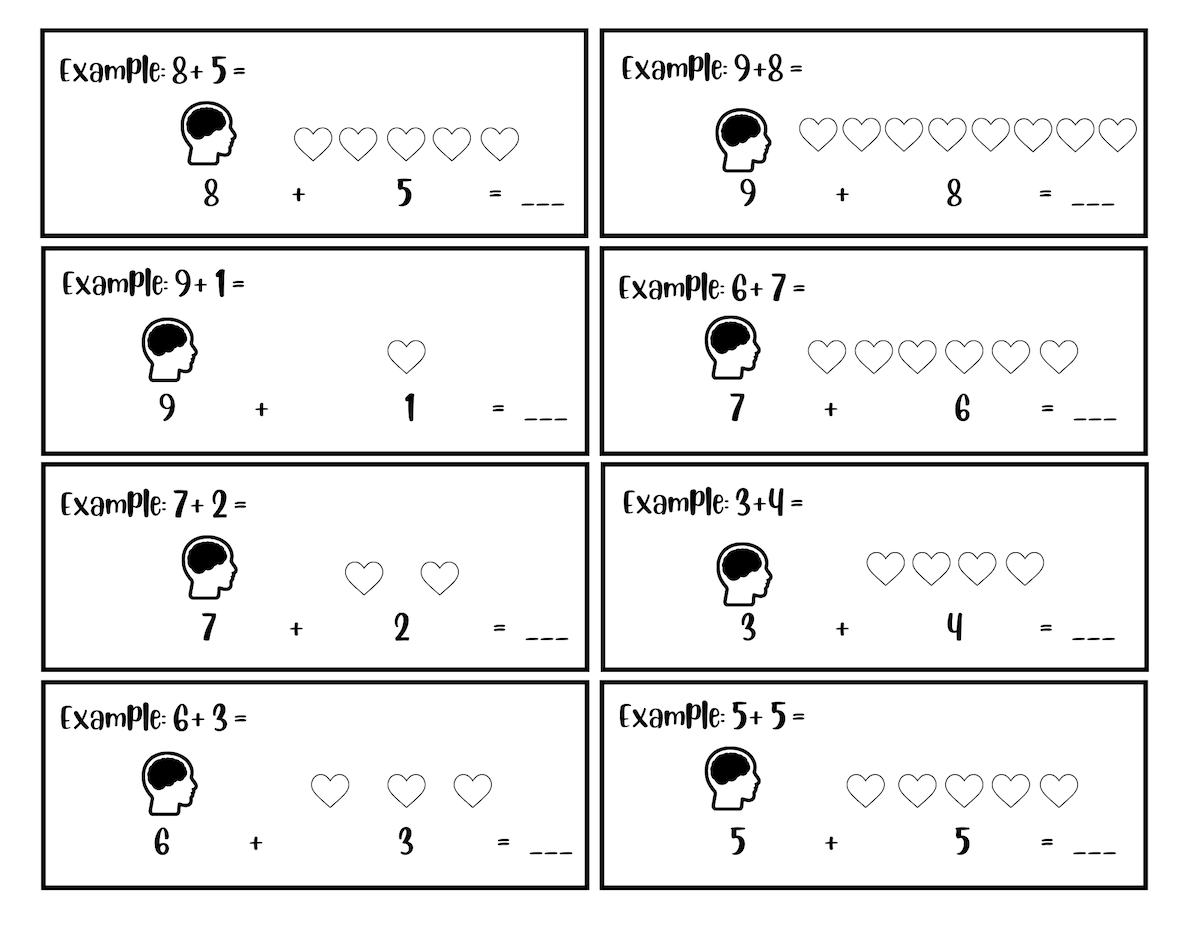
Adding on with objects is a fundamental strategy in early math education, particularly when teaching counting on in addition. This hands-on approach helps young learners visually and physically grasp the concept of increasing quantities, making abstract numerical ideas more concrete and understandable. By manipulating tangible items, children can build strong foundational skills that facilitate more advanced mathematical thinking in the future.
Why It’s Important
- Concrete Representation of Abstract Concepts: For many children, numbers are abstract ideas. Using objects like counters, blocks, or everyday items helps them see what addition truly means—combining groups to make a larger group.
- Enhances Number Sense: Engaging with objects strengthens a child’s understanding of number relationships, such as recognizing that adding one more object increases the count by one.
- Supports Diverse Learning Styles: Visual and kinesthetic learners benefit greatly from handling objects as part of the learning process, making math accessible to a broader range of students.
- Builds Confidence: Successfully manipulating objects to solve addition problems fosters a sense of achievement, encouraging learners to tackle more challenging tasks.
Steps to Incorporate Adding On with Objects
- Introduce the Concept with Real-Life Examples: Start by using familiar items. For example, “You have 3 apples, and I give you 2 more. How many apples do you have now?” Use the actual apples or counters to represent the problem.
- Model the Process: Demonstrate how to count the first group of objects fully, then “add on” by counting the new objects starting from the last number. For instance, “1, 2, 3… now add 4, 5. So, 3 + 2 = 5.”
- Guided Practice: Provide students with their own set of objects and simple addition problems. Guide them through the counting on process, offering support and correcting mistakes gently.
- Encourage Repetition and Variation: Use different objects (buttons, toy cars, beads) to maintain interest and reinforce the concept.
- Transition to Mental Math: As students become more comfortable, encourage them to visualize the objects in their minds, gradually moving towards solving problems without physical aids.
Games to Play When Learning Adding On with Objects
- Counting On Treasure Hunt: Hide objects around the room. Have students find a set number of items, then add more items you provide. They count the total using the “counting on” method.
- Add-On Towers: Give students building blocks. Start with a small tower (e.g., 4 blocks) and challenge them to add more blocks (e.g., 3). They count the original blocks, then continue counting as they add new ones.
- Roll and Add: Use dice to roll two numbers. Students count out objects for the first number, then “add on” the second number, counting from where they left off.
- Story Problems with Objects: Create simple stories involving addition. For example, “Liam has 5 cars. His friend gives him 3 more. How many cars does he have now?” Students use toy cars to act out the story and find the answer.
- Number Line Hop: Place a number line on the floor. A student starts on a number (e.g., 4), then physically “hops” forward the number of spaces to add on (e.g., 3 hops to land on 7).
Conclusion
Adding on with objects is a powerful strategy to support early mathematical development. It bridges the gap between concrete manipulation and abstract thinking, fosters confidence, and accommodates different learning styles. Through structured steps and engaging games, educators can create a dynamic and supportive environment where students thrive in their understanding of addition.
Get Your Adding By Counting On CONCEPTS Packet With 100 Pages:
Adding by Counting On Concepts & Investigations
100 Pages of Math Investigations and More Already Made Up

@engagethestages
Get Your Adding By Counting On Packet With Over 140 Pages:
Adding by Counting On Games
Over 140 Pages of Games Already Made Up

@engagethestages